
Money
Hidden Lifecycle of a Chargeback: From Customer Click to Bank Dispute

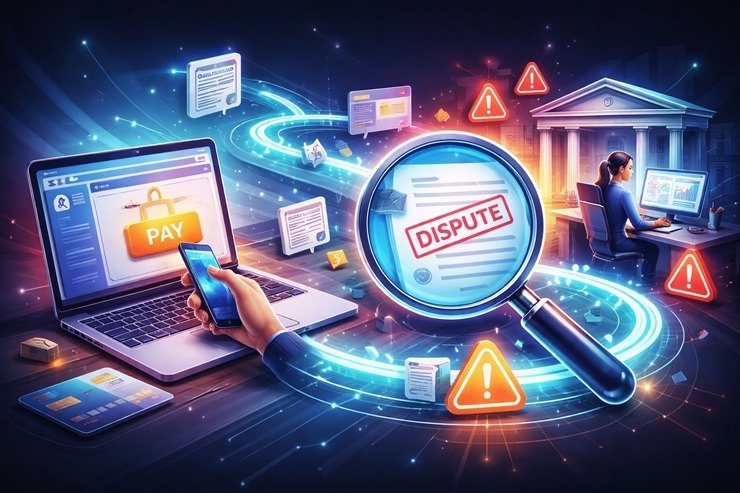
As digital payments have become the most preferred transaction method, the possibility of credit fraud and unauthorised access has also increased. That’s why both merchants and customers are in dire need of effective authentication protocols and risk management. And one of the last-resort mechanisms that offers customer protection is the chargeback.
Yet, while chargebacks were created as a safety net for legitimate customers, they can also become a potential tool to commit fraud against the merchants. Understanding the hidden lifecycle of chargeback fraud is essential if you want to safeguard your revenue and reduce exposure to fraudulent activity.
This blog will take you through each stage of the chargeback process, highlighting where fraud can occur and how merchants can protect themselves.
What is a Chargeback
As the name implies, a chargeback is a consumer protection process that involves the issuing bank returning funds to the cardholder after a dispute. Often initiated by the customer, it acts as a defence against fraudulent and unauthorised charges.
Note: a chargeback is not a refund, which is usually processed by the merchant. It is a mandatory reversal of funds administered by the bank.
What is Chargeback Fraud
So what if the customer has initiated a chargeback, but the merchant hasn’t done anything wrong? Or what if the customer has received the chargeback, but has never returned the merchandise? These scenarios are what we call chargeback fraud.
Often called friendly fraud, it is the misuse of the bank’s chargeback process to get a refund for a legitimate purchase. It’s an awfully deceptive tactic because chargebacks are designed to build trust in digital payment systems, not make merchants lose their revenue.
Hidden Lifecycle of a Chargeback Fraud
If you look closely, the lifecycle of a chargeback and chargeback fraud is actually the same. Except for a minute detail, there is a hidden trigger called “malicious intent”. Here’s a detailed breakdown on the hidden lifecycle of a chargeback fraud.
Phase 1 – Initiating Dispute
The first step in initiating the chargeback process is contacting the issuing bank to dispute a transaction. The deadline to initiate a chargeback can be upto multiple days after the purchase. The next step is a dispute investigation done by the issuing bank, reviewing the claim.
And if the dispute is found to be valid, the bank may issue a provisional credit to the customer. Additionally, the issuing bank sends the transaction back to the merchant’s bank, along with a reason code.
Note: Merchants are liable to pay a chargeback processing fee, along with losing the product and the revenue.
The Hidden Trigger (Intent)
The aspect that differentiates a chargeback fraud from a legitimate chargeback is the false or malicious intent. For instance, the customer can claim the item never arrived, was damaged, or was never ordered.
However, there is also a possibility of accidental friendly fraud where the false release reason is not intentional. For instance, the customer might not recognise the business name on their statement or might have forgotten the purchase.
Provisional Credit (Financial Impact)
A temporary refund issued by the bank to a cardholder’s account while investigating a dispute is what we call a provisional credit. The provisional credit might become permanent if the consumer wins, or might be reversed if the merchant wins.
Phase 2 – Acquirer to Merchant
Once the merchant’s bank receives the chargeback, it immediately debits the funds from the merchant’s account. Also, the bank notifies the merchant of the dispute initiated by the customer. Note that this is often the first time the merchant is made aware of the dispute.
Once notified, the merchant analyses the reason code sent by the customer’s bank to determine if they should accept the loss or contest the dispute. Usually, the merchant is given a very tight deadline of 2–20 days for responding.
Note: A high number of chargebacks can lead to a high-risk status or the merchant’s account termination.
Phase 3 – The Fight
This is where the process gets a little tricky. Usually, if the chargeback is legit, the merchant will accept the loss and comply with the bank’s provisional credit. But if the merchant thinks the dispute seems like a chargeback fraud, they can decide to fight the chargeback. To do so, they must gather concrete evidence to prove the transaction was valid.
Such evidence includes delivery receipts, signed contracts, or communication records. The evidence is then submitted to the merchant’s bank, which then gets forwarded to the issuing bank to represent the charge. Now the issuing bank reviews the new evidence to see if it overturns the original claim.
Phase 4 – Resolution and Beyond
Once the evidence is submitted, the issuing bank might uphold the chargeback, making the merchant lose revenue. Or the issuing bank might reverse it, making the customer lose the provisional credit.
In the event of the merchant winning, the cardholder can opt for a second review stage, often called pre-arbitration. If the dispute is still unresolved, it moves to arbitration, with the card network acting as a final, binding judge.
Note: Losing at this stage is expensive for the losing party.
Conclusion
Used legitimately, chargeback offers effective customer protection against merchandise fraud. But with malicious intent and illegitimate customers, it becomes a chargeback fraud that exploits merchants. What may seem like a simple refund to the customer is actually a complex, multi-step process involving banks, payment processors, and card networks. And when misused, it can be both costly and disruptive. That’s why you need to understand the hidden lifecycle of chargeback fraud, from the initial customer dispute to a full bank investigation.














Leadership Transformation in Modern Business: Moving Beyond Traditional Coaching

Homeowners: What to Look for When Choosing a Reliable Ac Repair Company in Las Vegas

Pregnant Women: Key Considerations When Seeking a Webster Technique Chiropractor

Scholarly Stars – 6 Surefire Keys To Successful Studies

Kitchen Kit-Up – The 6 Indispensable Items You Need To Get Your Kitchen Ready For Action

Exeter’s Student Housing Scene Is Expanding – What 2026 Students Should Know

How Historic Architecture Boosts Real Estate Value

Why Understanding Party Wall Agreements in Essex Is Important Before Building

Innovative Strategies for Engaging First-Grade Students in the Classroom

The Hidden Fees Eating Your Crypto Portfolio (And How to Avoid Them)

100 Motivational Quotes to Inspire You in 2026

100 Motivational Quotes to Start Your Day with Positivity

22 Best Self-Help Books to Read in 2026

How to Create a Vision Board That Actually Works (2026)

Changing Your Spending Habits

Top 50 Motivational Quotes for Success and Hard Work

How to Achieve Personal Growth in 2026

New Year Wishes and Quotes to Inspire and Celebrate (2026)

Do I Have to Pay a Debt That’s Very Old?

5 Excellent Reasons for a Healthcare Provider to Utilise the Services of a Nursing Agency
-

 Motivation5 years ago
4 Fun New Hobbies To Try This Year
-

 Quotes3 years ago
53 Motivational Gym Quotes to Fuel Your Workout
-

 Travel1 year ago
Why You Should Travel More: The Many Benefits of Seeing the World
-

 Quotes10 years ago
50 Most Powerful Quotes Ever Spoken
-
 Quotes3 months ago
100 Motivational Quotes to Inspire You in 2026
-

 Quotes2 years ago
43 Inspirational Quotes About Thoughts
-

 Quotes3 years ago
105 Motivational Quotes by Famous People
-
 Quotes9 months ago
100 Motivational Quotes to Start Your Day with Positivity