
Health
The Sleep Challenges Nobody Warns You About Before ACL Surgery

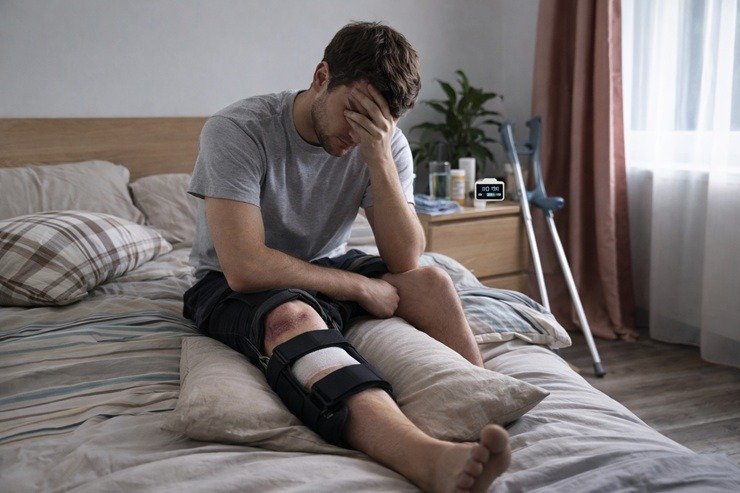
ACL surgery is one of the most common orthopedic procedures performed today. Athletes know the injury well; the pop, the instability, the surgery, the long road back. What most people going into ACL reconstruction don’t fully anticipate, though, is how significantly the first several weeks of recovery will affect their ability to sleep. Understanding how to sleep after ACL surgery ahead of time can make an enormous difference in how those early weeks feel.
Why Sleep Is So Disrupted
There are a few compounding factors that make sleep after ACL surgery genuinely difficult.
- Pain and inflammation: In the first days post-surgery, swelling and discomfort peak. The knee can feel hot, tight, and sensitive to pressure. Lying still for hours while the knee throbs is uncomfortable in a way that’s hard to appreciate until you’ve experienced it.
- The brace: Many ACL patients are sent home in a brace locked in extension, meaning the leg is held straight. This brace is often bulky, can be warm, and makes finding a comfortable sleep position significantly harder. Side sleeping with a braced leg requires either sleeping with the braced leg on top (awkward and pressure-creating) or on the bottom (pressure directly on the knee).
- Elevation requirements: Surgeons routinely recommend keeping the operative leg elevated above the level of the heart, especially in the first few days, to reduce swelling. Achieving this elevation comfortably through the night is harder than it sounds.
- Position restrictions: Depending on the specific procedure and surgeon’s guidance, some positions may be restricted. This limits the options that would otherwise allow a more natural, comfortable rest.
The Elevation Problem
Elevation is probably the most practically difficult instruction for new ACL patients to follow during sleep. The instinct is to pile pillows under the leg, but standard pillows compress and flatten, especially under the weight of a leg and brace. Maintaining meaningful, consistent elevation through a full night of sleep with standard pillows is difficult.
Inadequate elevation leads to more swelling. More swelling leads to more pain. More pain leads to worse sleep. It’s a cycle that’s frustrating to get caught in during a recovery that’s already demanding.
The Emotional Dimension
This is worth naming: ACL injuries often happen to active people, athletes, and individuals who don’t have much experience with significant physical limitations. The sudden reduction in mobility, combined with sleep deprivation, can make the emotional load of recovery heavier than expected. Poor sleep doesn’t just make physical recovery slower; it makes everything feel harder, including the psychological work of dealing with an injury.
Being prepared for this makes it easier to navigate. Knowing that disrupted sleep in the first week is normal, and that having the right setup can meaningfully shorten that disrupted phase, helps set realistic expectations.
Preparation Pays Off
The most consistent advice from people who have been through ACL recovery is to plan your sleep setup before surgery. Knowing how to sleep after ACL surgery in advance, and having the tools in place, means one less problem to solve when you’re groggy, uncomfortable, and limited in your ability to move around.
Think through your elevation strategy specifically. A stable wedge that holds its shape under the leg is significantly more effective than pillows that flatten by midnight. Consider how you’ll get in and out of bed with limited mobility. Think about where your ice machine or ice packs will be positioned relative to where you’re sleeping.
What to Discuss With Your Surgeon
Before your procedure, ask your surgical team specifically about position restrictions, brace protocols during sleep, and their elevation recommendations. Some patients are allowed to remove their brace at night after a certain point; others aren’t. Some have specific angle requirements for flexion or extension. These details will shape exactly what your sleep setup needs to look like.
Recovery from ACL surgery is a long process, often nine months to a year for full return to sport. However the early weeks set the tone, and sleep quality during that phase has a real impact on swelling management, pain levels, and your overall experience of recovery. Don’t leave it as an afterthought.







How to Negotiate Better Car Loan Terms with Your Lender

The Sleep Challenges Nobody Warns You About Before ACL Surgery

Trading BTC During Geopolitical Tensions: Lessons from Iran Conflicts

Financial Blind Spots That Are Secretly Draining Your Startup Profits

Tips for Buying and Selling Luxury Homes

Safe and Effective Ways to Relieve Back Pain at Home

How Commitment to a Challenge Can Redefine Your Limits

What Training for a Marathon Teaches You About Resilience

Key Elements Tenants Should Look for in a Commercial Office Space

How to Streamline Your Industrial Supply Chain for Maximum Efficiency

100 Motivational Quotes to Inspire You in 2026

100 Motivational Quotes to Start Your Day with Positivity

22 Best Self-Help Books to Read in 2026

How to Create a Vision Board That Actually Works (2026)

Changing Your Spending Habits

How to Achieve Personal Growth in 2026

New Year Wishes and Quotes to Inspire and Celebrate (2026)

Top 50 Motivational Quotes for Success and Hard Work

Do I Have to Pay a Debt That’s Very Old?

5 Excellent Reasons for a Healthcare Provider to Utilise the Services of a Nursing Agency
-

 Motivation5 years ago
4 Fun New Hobbies To Try This Year
-

 Quotes3 years ago
53 Motivational Gym Quotes to Fuel Your Workout
-

 Travel1 year ago
Why You Should Travel More: The Many Benefits of Seeing the World
-

 Quotes10 years ago
50 Most Powerful Quotes Ever Spoken
-
 Quotes3 months ago
100 Motivational Quotes to Inspire You in 2026
-

 Quotes2 years ago
43 Inspirational Quotes About Thoughts
-

 Quotes3 years ago
105 Motivational Quotes by Famous People
-
 Quotes8 months ago
100 Motivational Quotes to Start Your Day with Positivity