
Lifestyle
Everything You Need to Know to Convert Your Farm into a Thriving Social Enterprise

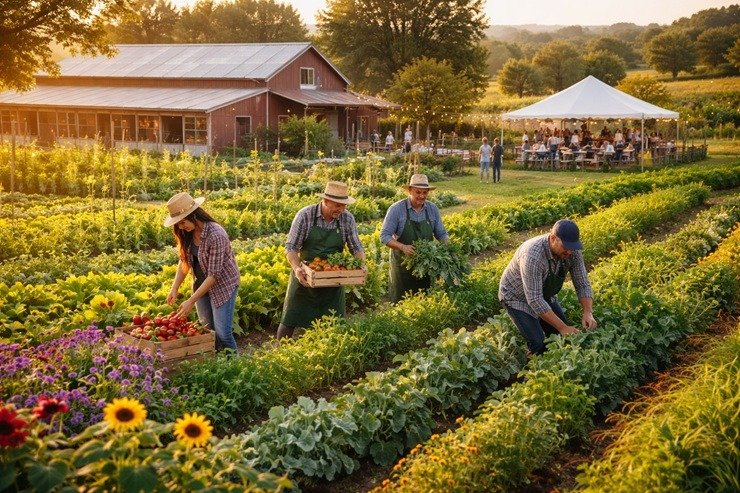
Social farms are powerful, community-building enterprises that can help nourish society in a number of ways. Whether you’re looking to start an animal sanctuary, are interested in sustainable farming practices, or are merely looking for new ways to bring in an income to your farm while also supporting your community, this guide is for you.
Discover everything you need to know to shape up your current acreage and make it into a thriving social enterprise right here.
Outline the Scope of Your Social Enterprise
One of the first steps to creating a social enterprise is to clearly define it. You can always build on your idea and expand on it, but first start with a single core. This could be saving a single breed of animal (or sub-type, like pets); it could be sustainable farming; it could be social farming. Either way, define your niche, outline your parameters, and create a comprehensive business plan. You’ll need this to start recruiting others, even if it’s just volunteers, and also if you intend to operate as a non-profit.
Improve the Amenities
If you plan on inviting in the public to your farm, even if it’s just for the purpose, of, say, having pick-your-own days or you plan on renting out small allotments, then you need to ensure the property is up to code and safe. This even applies if you plan on rescuing animals.
If you plan on taking in retired race horses, for example, you’ll need a stable large enough to accommodate them. If you don’t have one already, or your current barn isn’t up to snuff, then know you can often quickly rectify this with custom Amish pole buildings. These buildings use less materials and labor, so they can be put up faster and at a more attractive price-point.
Make Key Partnerships
The entire purpose of a social enterprise is to engage with the community. If the community does not know you’re there or what you do, then your enterprise has failed. That’s why you need to make key partnerships. You can and should start, for example, with your local government and any nearby (even state-wide) universities and colleges. An animal rescue, for example, should partner with local vets and vet colleges.
If you’re looking into developing new sustainable farming practices, you’ll want to get in touch with relevant departments at the university-level. You will also want to consider joining a cooperative model. The one used by Payoga/Kapatagan MPC, for example, helps farmers earn by selling fertilizer to the cooperative, allowing them to further sustain their development.
Make Your Social Enterprise Sustainable
For any social enterprise it’s imperative that your operations are sustainable, and not jsust in an environmental sense. You need to continually have the funds to manage your operations, and even be able to put money aside. With that in mind, try to increase your income streams by:
- Hosting paid workshops, pick-your-own-days, festivals, events, or tours
- Partnering with donors, relevant organizations, or the local government
- Using the latest technology to improve productivity and streamline operations, to minimize overhead costs
- Join value chains that enable direct business transactions between suppliers and buyers to eliminate markups.
- Market your social enterprise on social media to gain more volunteers, donations, and business.
There are so many ways you can increase your income, establish sustainable and ethical practices, and improve your community. Above all, however, remember that you cannot, and should not do it alone. To succeed as a social enterprise, you need to be social.













5 Signs You’re Not Just Busy, You’re Overwhelmed

How Hiring Emergency Water Damage Restoration Service Prevents Structural Rot

Planning a Lahore Heritage Break with Time to Explore

How Small Businesses Can Make Cross-Border Payments Faster, Clearer, and More Reliable

How Tampa Businesses Can Choose a Commercial Location

How High School Counselor Marketing Helps College Admissions Teams Reach Early Decision and Early Action Applicants

Create a Flexible Fat Loss Routine You Can Maintain Long-Term

Keep Your CPR Skills Ready: A Simple Renewal Plan for Work, Home, and Community

The Moving-Day Survival Kit Every Household Should Prepare

Things People Wish They Had Planned Better Before Moving

100 Motivational Quotes to Inspire You in 2026

How to Create a Vision Board That Actually Works (2026)

22 Best Self-Help Books to Read in 2026

How to Achieve Personal Growth in 2026

New Year Wishes and Quotes to Inspire and Celebrate (2026)

Loeb Smith reviews: Why Crypto Licensing Demands Patience, Structure, and Skepticism

How to Leverage Personal Development for Career Advancement

Top Fitness Coach Certification Programs for Aspiring Trainers

From Denver to Vail: Secrets, Snow, and Soul of the Rockies

How to Choose the Best Manali Tour Package for a Family-Friendly Vacation?
-

 Motivation6 years ago
4 Fun New Hobbies To Try This Year
-

 Quotes4 years ago
53 Motivational Gym Quotes to Fuel Gym Workout
-

 Quotes11 years ago
50 Most Powerful Quotes Ever Spoken
-

 Travel2 years ago
Why You Should Travel More: The Many Benefits of Seeing the World
-
 Quotes10 months ago
100 Motivational Quotes to Inspire You in 2026
-

 Quotes3 years ago
43 Inspirational Quotes About Thoughts
-

 Quotes4 years ago
Motivational Quotes by Famous People
-

 Quotes1 year ago
100 Motivational Quotes to Start Your Day with Positivity