
Crypto
The Biggest Crypto Mistake I Made (And How I Fixed It)

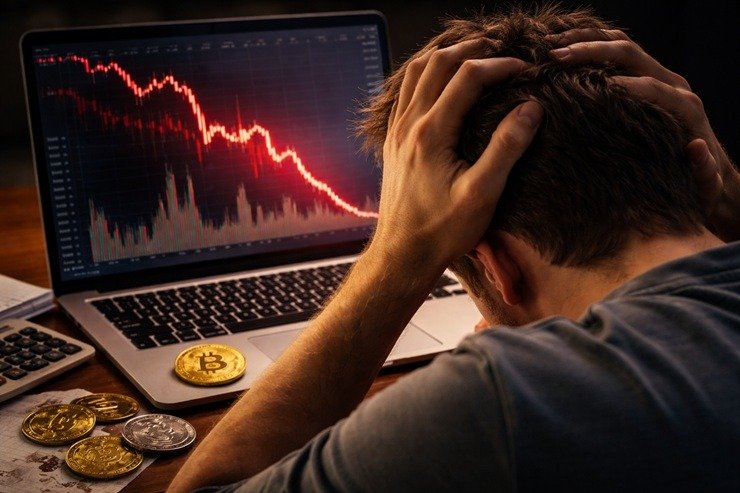
For two years, I treated crypto exchanges like banks. Kept most of my holdings there, figured that’s just how you do it, seemed convenient.
Then in September 2024, I tried to withdraw some Bitcoin and the transaction just… sat there. Pending. For three days.
No explanation. Support ticket got a generic “we’re experiencing high withdrawal volumes” response. Meanwhile my Bitcoin was locked in limbo while I watched the price move without being able to do anything about it.
That’s when I realized: treating exchanges like banks was my biggest mistake. Because they’re not banks, and pretending they are creates risks I’d been ignoring.
Why Exchanges Aren’t Banks
Banks are heavily regulated, insured (at least up to certain amounts), and operate under strict rules about customer funds. When you deposit money in a bank, regulations dictate what they can and can’t do with it.
Crypto exchanges? Different story entirely.
They hold your crypto, sure. But regulations are still catching up. Insurance is limited or non-existent. And what they can do with your funds while holding them is often unclear.
More importantly: banks don’t randomly freeze withdrawals because of “high volumes.” Banks don’t lock your account for verification out of nowhere. Banks don’t suddenly change their fee structures or terms of service.
Exchanges do all of that. Regularly.
What That Pending Withdrawal Taught Me
While my Bitcoin sat in pending status for three days, I had a lot of time to think.
The crypto was supposed to be mine. I’d bought it, it showed in my account balance, but I couldn’t actually access it. Someone else controlled whether and when I could move my own assets.
That’s not ownership. That’s custody with extra steps.
I started calculating how much of my time I spent managing exchange accounts. Logging in to check balances. Dealing with verification requests. Monitoring different platforms. Worrying about which exchange had what.
Easily several hours per month. And for what? The “convenience” of having crypto sitting on platforms where I didn’t actually control it?
The Shift to Self-Custody
Once my withdrawal finally processed, I made a decision: move everything off exchanges except what I absolutely needed there.
Bought a hardware wallet. Set it up carefully, tested it with small amounts first, then gradually moved my serious holdings over.
The first week felt weird. Nervous, even. What if I lost the hardware wallet? What if I forgot the PIN? What if something went wrong?
But then I realized: these were risks I could control. I could store the wallet securely. I could remember the PIN or write it down safely. I could make backup recovery phrases.
What I couldn’t control was exchange security, exchange policies, exchange stability. Those risks were completely out of my hands.
The Question Everyone Asks
“But how do you trade if your crypto isn’t on exchanges?”
That question assumes trading requires keeping funds on platforms. It doesn’t.
I don’t day trade. I hold positions long-term and occasionally rebalance between different cryptos. That doesn’t need exchange custody.
When I need to convert Bitcoin to Ethereum, I use instant swap services like Changeum.io. Send BTC from my wallet, receive ETH to my wallet. The swap happens wallet-to-wallet without any custody period except the transaction itself.
Takes about 20 minutes. No deposit waiting, no withdrawal fees, no wondering if the platform will let me access my funds. Just a straightforward conversion.
This was the piece that made self-custody practical. Before instant swaps, you kind of did need exchanges for any conversion. Now you don’t.
What Changed After the Switch
Most obvious change: I stopped worrying about exchange security.
Every few months there’s news about some exchange getting hacked, having liquidity problems, or freezing withdrawals. Used to be that news would make me nervous about my holdings. Now? Doesn’t affect me. My crypto isn’t on those platforms.
Less obvious change: I make better decisions.
When crypto sits on an exchange, there’s this psychological pressure to do something with it. It’s right there, trading is easy, might as well make some moves, right?
With crypto in my wallet, there’s friction before any trade. I have to deliberately decide to convert something, set up a swap, execute it. That friction is healthy. It prevents impulsive decisions.
I trade maybe 80% less than I used to. My returns are better because I’m not constantly churning the portfolio and paying fees.
The One Exception
I kept one exchange account for one specific purpose: buying crypto with regular money.
You still need exchanges for fiat on-ramps. I haven’t found a better way to convert dollars to Bitcoin than using a platform like Coinbase.
But here’s the difference: crypto doesn’t stay there.
I buy, wait for the transaction to clear, immediately withdraw to my wallet. The crypto is on the exchange for maybe 20-30 minutes total. Not days, not weeks, not indefinitely.
This minimizes exposure. Even if the exchange has problems, the most I could lose is whatever’s in transit during that narrow window.
What I Wish I’d Known Earlier
That “not your keys, not your crypto” isn’t just a slogan. It’s literally true.
When exchanges hold your crypto, they control access. They can delay withdrawals. They can freeze accounts. They can change terms. You’re trusting them completely.
That trust might work out fine. Many people use exchanges for years without problems. But you’re taking on risk you don’t need to take.
I also wish I’d known that self-custody isn’t complicated or risky if you do it properly. The learning curve is steeper than just leaving crypto on exchanges, but it’s not difficult. A few hours of research and setup gives you actual control over your assets.
The Security Question
People often ask: “Isn’t keeping crypto on major exchanges safer than managing it myself?”
Depends on the comparison.
If your alternative to exchanges is writing your private key on a sticky note and leaving it on your desk, then yeah, exchanges might be safer for you personally.
But if you use a hardware wallet properly – secure the device, back up recovery phrases safely, use strong PINs – your personal security can exceed exchange security.
Because exchanges are centralized targets. They hold millions of users’ funds. That makes them attractive to sophisticated attackers.
Your personal wallet? Not an attractive target. Nobody’s going to spend serious resources trying to hack your Ledger when exchanges are available.
The Real Cost of Convenience
Exchanges sell convenience. “Keep everything in one place. Easy trading. Simple interface.”
The cost of that convenience:
You don’t actually control your assets. Someone else does.
Your access depends on their policies, which can change.
Your security depends on their security, which might fail.
Your crypto can be frozen, delayed, or locked for reasons outside your control.
Is that worth the convenience of not managing your own wallet? For me, the answer became clearly no.
How to Actually Make the Change
If you’re still keeping most of your crypto on exchanges and want to change that, here’s what worked for me:
Start small. Get a hardware wallet, set it up, move a tiny amount to test. Like $50 worth. Make sure you understand how it works before moving serious funds.
Do it gradually. Don’t withdraw everything at once. Move portions over time as you get comfortable with the process.
Test recovery. Before moving large amounts, test the recovery process with your small test amount. Make sure you understand how to restore access if something happens to the device.
Keep one exchange account for fiat on-ramps if you need it. But use it only for that purpose, and withdraw immediately after purchases.
Try instant swaps for conversions instead of using exchanges. See how it works with small amounts before committing to larger ones.
Two Years Later
It’s been about two years since that pending withdrawal made me rethink everything.
My crypto lives in my wallets now. Hardware wallet for serious holdings, software wallet for amounts I might want to move around.
I’ve done maybe 40-50 swaps through instant platforms when I needed conversions. Every one completed smoothly. Faster than the exchange deposit-trade-withdraw cycle, and I never worried about withdrawal delays.
Zero times has my account been frozen for verification. Because I don’t have accounts to freeze.
Zero times have I worried about exchange hacks affecting my holdings. Because my holdings aren’t on exchanges.
Zero times have I dealt with withdrawal limits or arbitrary delays. Because I control my crypto directly.
The “convenience” I gave up by not keeping everything on exchanges? Turned out not to be convenient at all. It was dependency disguised as convenience.
Actual convenience is having your crypto in your wallet, immediately accessible, under your complete control. No permissions needed, no waiting for platforms, no hoping customer support responds.
What About You?
If you’re reading this with crypto sitting on exchanges right now, ask yourself: why?
Is it because you’re actively trading daily? Fair reason, you probably need exchange access for that.
Or is it just because that’s where you bought it and you never moved it? That’s how I ended up leaving crypto on platforms for two years.
Is the convenience of having it readily available worth the custody risk, withdrawal uncertainty, and dependence on platform policies?
For me, once I actually thought about that question, the answer was obvious. The trade-offs didn’t make sense anymore.
That pending Bitcoin withdrawal in 2024 was frustrating at the time. Looking back, it was the wake-up call I needed to fix the biggest mistake I was making with crypto.
Sometimes the best lessons come from things going wrong just enough to make you rethink your approach, but not so wrong that it causes real damage.
I got lucky. My withdrawal eventually processed. I had time to change my setup before anything seriously bad happened.
You might not get that warning. Better to fix the mistake before finding out the hard way that it was a mistake.











How to Build an Investment Plan That Can Handle Market Swings

How Coastal Storms Overwhelm Residential Pipes During Drain Cleaning in Miami

How Skin Renewal Microneedling at Anne Therese Transforms Dull Skin

Natural Remedies Are Shaping the Next Generation of Mindful Lifestyles

What Visitors Should Know About Miami Roads, Rental Cars and Road Accidents

5 Signs You’re Not Just Busy, You’re Overwhelmed

How Hiring Emergency Water Damage Restoration Service Prevents Structural Rot

Planning a Lahore Heritage Break with Time to Explore

How Small Businesses Can Make Cross-Border Payments Faster, Clearer, and More Reliable

How Tampa Businesses Can Choose a Commercial Location

100 Motivational Quotes to Inspire You in 2026

How to Create a Vision Board That Actually Works (2026)

22 Best Self-Help Books to Read in 2026

How to Achieve Personal Growth in 2026

New Year Wishes and Quotes to Inspire and Celebrate (2026)

Loeb Smith reviews: Why Crypto Licensing Demands Patience, Structure, and Skepticism

How to Leverage Personal Development for Career Advancement

Top Fitness Coach Certification Programs for Aspiring Trainers

From Denver to Vail: Secrets, Snow, and Soul of the Rockies

How to Choose the Best Manali Tour Package for a Family-Friendly Vacation?
-

 Motivation6 years ago
4 Fun New Hobbies To Try This Year
-

 Quotes4 years ago
53 Motivational Gym Quotes to Fuel Gym Workout
-

 Quotes11 years ago
50 Most Powerful Quotes Ever Spoken
-

 Travel2 years ago
Why You Should Travel More: The Many Benefits of Seeing the World
-
 Quotes10 months ago
100 Motivational Quotes to Inspire You in 2026
-

 Quotes3 years ago
43 Inspirational Quotes About Thoughts
-

 Quotes4 years ago
Motivational Quotes by Famous People
-

 Quotes1 year ago
100 Motivational Quotes to Start Your Day with Positivity