
Lifestyle
Caster Buying Guide: Best Wheels for Different Floor Types

Key Takeaways
- Understanding the specific requirements of your work environment is crucial for selecting the right casters.
- Factors such as load capacity, floor conditions, and environmental factors significantly influence caster performance.
- Proper caster selection can prevent workplace injuries and improve operational efficiency.
Casters are critical components across a diverse range of industries, playing an essential role in the mobility of both heavy and light equipment. Choosing the appropriate caster does more than facilitate movement; it ensures equipment, materials, and workers are protected from damage and injury. Whether you’re outfitting a warehouse, hospital, or manufacturing facility, the right industrial steel caster wheels can profoundly affect daily operations and overall productivity.
Every environment brings its own set of challenges, from uneven floors to exposure to chemicals or heavy loads. Evaluating your work environment and operational needs before purchasing casters will improve efficiency, increase safety, and reduce maintenance costs. Casters thoughtfully selected to meet specific requirements prevent unnecessary downtime, equipment replacement, and even workplace accidents.
By matching caster design and material to the application, you protect your investment and ensure smooth operation. From selecting wheel size and material to the right balance of maneuverability and stability, these choices directly affect the ease of movement and longevity of your equipment. Even seemingly minor details in caster configuration can translate into measurable gains in productivity and safety.
It’s also essential to look beyond the immediate load requirements. Factors like flooring type, climate, exposure to corrosive substances, and even personnel’s ergonomic needs all shape which caster options will best suit your situation. Companies should create a checklist of their environment’s unique considerations before purchasing, which may help prevent common mistakes and yield significant long-term savings.
Understanding Caster Load Capacity
Accurately assessing the load each caster must carry is the foundation for appropriate caster selection. When casters are overloaded, wheels can develop flat spots, frames may bend, and bearings can fail, creating safety risks and costly replacements. A good rule of thumb is to divide the total expected weight (including the object and its load) by the number of casters, then allow for additional capacity to account for uneven weight distribution or impacts. For instance, if a loaded cart weighs 1,000 pounds and requires four casters, each caster should be rated for at least 300 pounds, not just 250. This recommendation protects against overload when the surface is not perfectly level or during turns, which can shift extra weight onto just two or three wheels at a time. For more guidance, consider resources like this overview from Machinery Lubrication explaining weight distribution with casters.
Assessing Floor Conditions
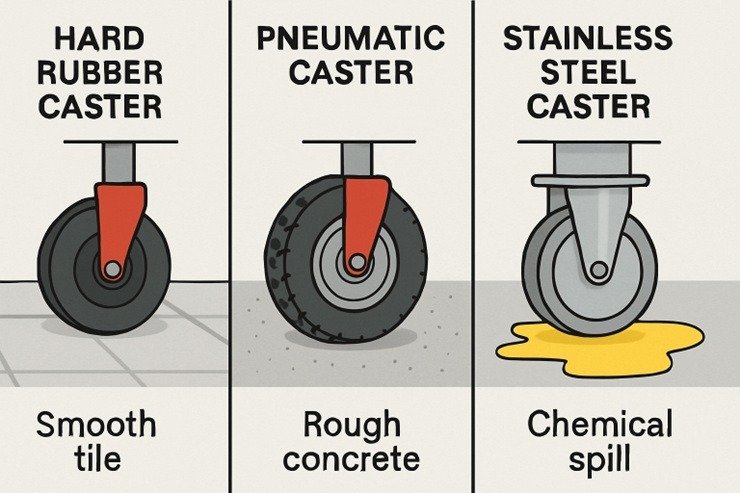
The surface on which casters operate directly determines the wheel material to use. Smooth surfaces, such as tile and sealed concrete, are suitable for casters with hard rubber or polyurethane wheels, which offer lower rolling resistance and quiet operation. They also do not mark the floor and are less likely to get stuck on minor debris. For rough, cracked, or uneven flooring, softer tread materials, like pneumatic or semi-pneumatic tires, absorb shocks and navigate obstacles more easily, helping protect both the load and the flooring. Work environments with floor transitions, expansion joints, or loose debris should select wheels accordingly to avoid jarring impacts and frequent wheel damage.
Considering Environmental Factors
Some workspaces present challenging conditions, such as exposure to chemicals, salts, or extreme temperatures. These factors dictate wheel material and hardware choices. Casters made of stainless steel or with zinc-plated finishes are ideal for wet or corrosive environments, such as food processing or laboratories. Wheels made from specific compounds, such as nylon or phenolic, are preferred at higher temperatures or where exposure to solvents is common. When in doubt, consult with your caster supplier about chemical compatibility and temperature ratings to prevent premature failure. For further insight, this article by Safety+Health Magazine discusses how different environments influence caster performance.
Enhancing Maneuverability
Tight corners, narrow aisles, or crowded spaces all require casters that offer efficient navigation. Swivel casters provide excellent maneuverability, enabling equipment to pivot or rotate in place, which is particularly useful in environments requiring frequent directional changes. Rigid casters stabilize straight-line movement, making them suitable for longer distances. Many applications benefit from combining both types: two rigid and two swivel casters allow ease of steering with steady guidance. Wheel diameter also matters; larger wheels roll more smoothly over obstacles and resist getting caught on small debris, reducing worker fatigue.
Prioritizing Safety and Ergonomics
The right caster configuration can significantly impact workplace safety. Proper wheel size, tread material, and bearing type minimize the force required to start or maintain movement, helping reduce repetitive strain injuries among workers. Ergonomic casters are designed to mitigate push-and-pull resistance, making tasks less physically demanding. Brakes and total lock systems further add safety by keeping equipment stationary when required. Ensuring the ergonomic compatibility of casters not only helps prevent injury but may also reduce worker compensation claims and downtime.
Maintenance and Durability
Investing in high-quality casters pays off in reduced maintenance and longer equipment life. Durable caster wheels made with high-grade materials and sealed bearings can withstand harsh conditions and require less frequent replacement. It is vital to establish a regular inspection schedule to spot wear, debris build-up, or damage, preventing unexpected failures and costly repairs. Lubrication of moving parts and timely replacement of parts keep operations running smoothly and protect your investment over time.
Conclusion
Choosing the right casters is more than a purchasing decision; it is a critical aspect of workplace safety, equipment longevity, and operational efficiency. By assessing load requirements, floor conditions, environmental challenges, and ergonomic needs, businesses can optimize both performance and safety. Careful planning and maintenance not only prevent accidents but also save money by extending the lifespan of valuable equipment. Keep these factors in mind when selecting casters for your specific work environment, and your operations will benefit from smoother transitions and improved productivity.











How Do the Brain and Body Work Together?

How Digital Convenience Is Changing the Way We Discover and Buy What We Love

Nano Banana 2.5 and the Rise of Prompt-Led Image Creation

These 5 Shower Filter Brands Will Improve Your Water Quality and Your Wellbeing

Your Dental Checkup Is Doing More For Your Health Than You Think

How to Plan a Home Renovation Materials List and Timeline

The New Limousine: How Luxury Mercedes Sprinter Vans Are Changing the Ride

Cloud Migration Mistakes Businesses Still Make and How to Avoid Them

Small Daily Choices For A Healthier, Lower-Waste Oral Care Routine

How Mobile Notary Services Make Document Signing More Convenient

100 Motivational Quotes to Inspire You in 2026

How to Create a Vision Board That Actually Works (2026)

22 Best Self-Help Books to Read in 2026

How to Achieve Personal Growth in 2026

New Year Wishes and Quotes to Inspire and Celebrate (2026)

Loeb Smith reviews: Why Crypto Licensing Demands Patience, Structure, and Skepticism

How to Leverage Personal Development for Career Advancement

Top Fitness Coach Certification Programs for Aspiring Trainers

From Denver to Vail: Secrets, Snow, and Soul of the Rockies

How to Choose the Best Manali Tour Package for a Family-Friendly Vacation?
-

 Motivation6 years ago
4 Fun New Hobbies To Try This Year
-

 Quotes4 years ago
53 Motivational Gym Quotes to Fuel Gym Workout
-

 Quotes11 years ago
50 Most Powerful Quotes Ever Spoken
-

 Travel2 years ago
Why You Should Travel More: The Many Benefits of Seeing the World
-
 Quotes9 months ago
100 Motivational Quotes to Inspire You in 2026
-

 Quotes3 years ago
43 Inspirational Quotes About Thoughts
-

 Quotes4 years ago
Motivational Quotes by Famous People
-

 Quotes1 year ago
100 Motivational Quotes to Start Your Day with Positivity