
Crypto
Trading BTC During Geopolitical Tensions: Lessons from Iran Conflicts

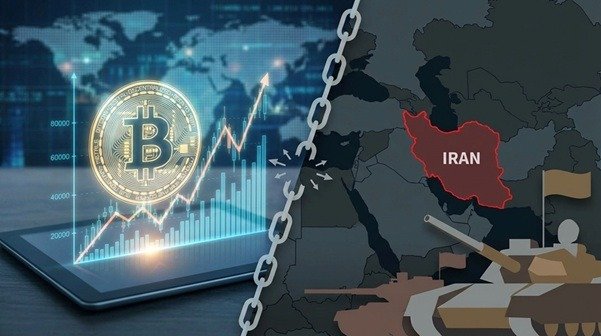
Bitcoin’s price often reacts to global political instability. The conflicts involving Iran in early 2026 provided useful data on how BTC behaves during periods of uncertainty. By observing these patterns, traders can better understand market movements and manage their portfolios during geopolitical events.
Historical Impact of Geopolitical Events on BTC Prices
Past geopolitical events, such as the Russia-Ukraine conflict in 2022 and the Iran strikes in early 2026, typically caused initial BTC price drops. However, historical data shows that the market generally stabilizes within a few weeks.
When news of the Russia-Ukraine conflict broke in early 2022, BTC experienced an approximately 8% decline to around $34,400 before recovering over the following weeks. A similar pattern occurred during later Middle East tensions (such as those in 2024 and 2025), with 3% to 4% dips followed by price reversals as market panic subsided.
During the Iran conflict escalation starting on February 28, 2026, which included US-Israeli strikes, the broader crypto market saw significant liquidations. BTC temporarily dropped by between 3% and 4.5% to the $63,000 to $63,255 range. By March 2026, the price had stabilized and rebounded to $68,000 to $69,000 within days. Additionally, Iranian cryptocurrency exchanges, such as Nobitex, saw a 700% surge in outflows, peaking at nearly $3 million in just hours and totaling over $10.3 million by early March, though the global Bitcoin network continued operating normally.
| Event | Initial BTC Drop | Recovery Timeframe | Post-Recovery Price Level |
|---|---|---|---|
| Russia-Ukraine (2022) | ~8% (to ~$34,400) | Days to weeks | ~$45,000 |
| Later Middle East Tensions (2024/2025) | 3% - 4% | Days to weeks | ~$28,000 - $30,000 range |
| Iran Strikes (Feb 2026) | 3% - 4.5% (to ~$63,000 - $63,255) | Days | $68,000 - $69,000 |
BTC Trading Strategies Amid Geopolitical Tensions
Managing risk is essential when trading during geopolitical events. A common strategy is to limit position sizes to 1% or 2% of a portfolio to reduce exposure to sudden price changes. Traders often use technical indicators like Bollinger Bands to measure market volatility and anticipate price movements before and after major news breaks.
When comparing BTC to gold as a safe-haven asset during the Iran crisis, gold maintained a steadier price in the short term. BTC showed short-term risk-off behavior rather than acting as a strict safe-haven like gold, though it demonstrated a much quicker recovery. Furthermore, BTC’s 24/7 trading availability allowed investors to react immediately to news outside of traditional stock market hours. Using a Dollar-Cost Averaging (DCA) approach helped many traders manage their entry points during the sudden price dips.
On-chain metrics provide additional context for trading decisions:
- Whale Activity: Data showed an increase in purchases by large holders after the initial price drop in 2026, indicating accumulation amid the volatility.
- Network Hash Rate: The disruption in Iran temporarily affected its pre-conflict 2% to 5% share of the global hash rate, but the global network adjusted quickly with a minimal dip.
- Exchange Outflows: An increase in assets moving off exchanges indicated that investors were transferring their BTC to self-custody rather than selling.
Current BTC Market Data and Iran Conflict Lessons
As of mid-March 2026, BTC consolidated in the $67,000 to $74,000 range following the February events. While traditional markets reacted to fluctuations in oil prices, BTC showed a different trend, maintaining its support levels despite the initial shock.
Market analysis shows that while geopolitical risk indexes increased, BTC did not strictly follow the downward trend of equities. This was partly due to market expectations regarding future US Federal Reserve policies. The initial sell-off was brief, and the available supply was quickly absorbed by the market.
A key observation from the 2026 Iran conflict is the difference between traditional financial systems and decentralized networks. While local regions faced strict foreign exchange controls, BTC remained accessible. A common strategy observed was traders utilizing the BTC/USDT trading pair to convert assets into stablecoins during periods of high volatility, then repurchasing BTC once the market stabilized.
| Asset | 1-Week Post-Dip Trend | Mid-March 2026 Trend |
|---|---|---|
| Bitcoin (BTC) | Rebound to $68k - $69k | Consolidating ~$67,000 - $74,000 |
| Gold | +1% to +2% (or -2% depending on the exact window) | Varying slightly |
| S&P 500 | Flat | Flat |
Conclusion
The early 2026 Iran conflict demonstrated how Bitcoin reacts to international tensions. By analyzing initial price dips, on-chain data, and recovery patterns, traders can develop more informed strategies for managing geopolitical volatility. Understanding these historical patterns is useful for preparing for future market events.
Frequently Asked Questions
How did the 2026 Iran conflict affect BTC prices?
BTC experienced an initial decline of 3% to 4.5%, reaching the $63,000 to $63,255 range following news of the strikes. Within a few days, the market stabilized, and the price returned to the $68,000 to $69,000 range.
Is BTC a safe-haven during geopolitical tensions like Iran?
In the short term, BTC exhibits risk-off behavior rather than acting as a strict safe-haven like gold, meaning it often drops during initial shocks. However, its rapid recovery makes it an attractive asset for investors looking for long-term hedges against changes in national monetary policy or inflation.
What mining risks emerged from Iran conflicts?
Iran accounted for an estimated 2% to 5% of the global Bitcoin hash rate prior to the conflict. While local outages occurred, the global network automatically adjusted its difficulty and maintained normal operations with minimal disruption.
How to trade BTC volatility in geopolitical events?
Common methods include maintaining small position sizes, using Dollar-Cost Averaging during price drops, and monitoring on-chain data (such as exchange outflows to self-custody wallets) to assess market sentiment.
Will US-Iran escalation boost BTC long-term?
Long-term price movements depend heavily on broader macroeconomic factors. Geopolitical escalations can influence government policies, such as interest rate adjustments or increased spending, which have historically affected BTC’s price direction.











How to Plan a Home Renovation Materials List and Timeline

The New Limousine: How Luxury Mercedes Sprinter Vans Are Changing the Ride

Cloud Migration Mistakes Businesses Still Make and How to Avoid Them

Small Daily Choices For A Healthier, Lower-Waste Oral Care Routine

How Mobile Notary Services Make Document Signing More Convenient

Real Time Exam Supervision Needs More Than Extra Staff

Hunting Season Road Trip Planning: What to Pack Before You Leave

7 Ways Educational Institutions Can Improve Their Learning Spaces

Beyond Med School: Elevating Your Healthcare Impact with a Specialized Master’s Degree

Bathroom Remodeling: How to Improve Safety and Maintenance

100 Motivational Quotes to Inspire You in 2026

How to Create a Vision Board That Actually Works (2026)

22 Best Self-Help Books to Read in 2026

How to Achieve Personal Growth in 2026

New Year Wishes and Quotes to Inspire and Celebrate (2026)

Loeb Smith reviews: Why Crypto Licensing Demands Patience, Structure, and Skepticism

How to Leverage Personal Development for Career Advancement

Top Fitness Coach Certification Programs for Aspiring Trainers

From Denver to Vail: Secrets, Snow, and Soul of the Rockies

How to Choose the Best Manali Tour Package for a Family-Friendly Vacation?
-

 Motivation6 years ago
4 Fun New Hobbies To Try This Year
-

 Quotes4 years ago
53 Motivational Gym Quotes to Fuel Gym Workout
-

 Quotes11 years ago
50 Most Powerful Quotes Ever Spoken
-

 Travel2 years ago
Why You Should Travel More: The Many Benefits of Seeing the World
-
 Quotes9 months ago
100 Motivational Quotes to Inspire You in 2026
-

 Quotes2 years ago
43 Inspirational Quotes About Thoughts
-

 Quotes4 years ago
Motivational Quotes by Famous People
-

 Quotes1 year ago
100 Motivational Quotes to Start Your Day with Positivity