
Business
Gantt Charts in Project Management: When They Work – and When They Don’t


Gantt charts are among the oldest and most recognizable tools in project management. Their value lies in a simple premise: visualizing work over time to make dependencies, durations, and deadlines explicit. Yet, while this simplicity has made Gantt charts a staple in planning rooms and executive decks, their effectiveness depends entirely on how and when they are used.
In practice, Gantt charts deliver exceptional value in environments that require structured sequencing and predictability – but they can also become barriers to progress when applied indiscriminately. Understanding the conditions in which they help – and those in which they hinder – is essential for leaders striving to improve execution without imposing unnecessary rigidity on their teams.
Why Gantt Charts Work: Structure, Visibility, and Predictability
For projects with defined scope, clear milestones, and interdependent tasks, this timetable-centric view transforms abstract plans into actionable schedules. By laying out tasks along a timeline, Gantt charts allow teams and stakeholders to see how delays in one activity ripple through the rest of the plan.
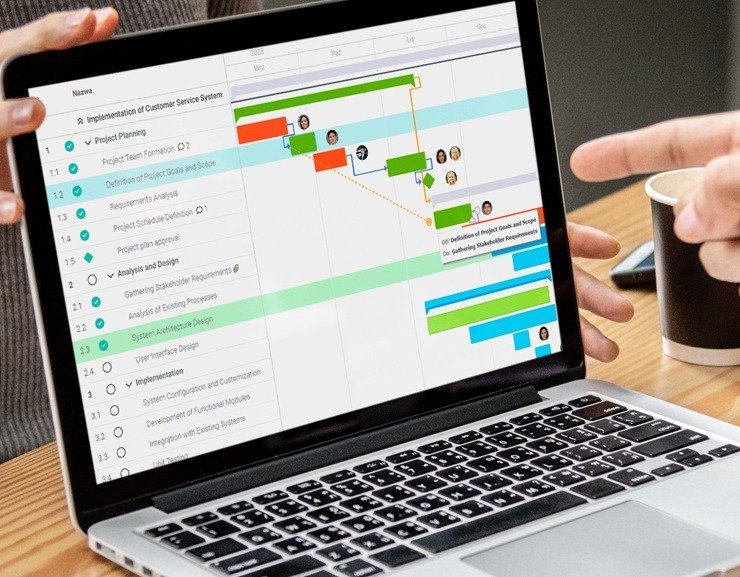
This visibility enables proactive decision-making, rather than retroactive firefighting.
Gantt charts are especially valuable when:
- Projects have fixed deadlines or contractual commitments.
- Work requires strict task sequencing (e.g., engineering phases, regulatory reviews, integration milestones).
- Multiple teams depend on each other’s outputs.
- Risk management requires early identification of critical path constraints.
Importantly, Gantt charts also serve as powerful communication tools. They align distributed teams around a shared execution narrative, minimizing misunderstandings about who is doing what and when. For a practical guide to what a Gantt chart is and how it supports planning and execution, see: https://flexi-project.com/what-is-a-gantt-chart-and-how-do-you-create-one-example/
How Gantt Charts Support Task Organization and Team Efficiency
A detailed project timeline alone does not ensure delivery, but when combined with good task structuring, it enhances efficiency. A Gantt chart encourages teams to break work into discrete activities, assign ownership, and sequence logically – a process that itself clarifies purpose and accountability.

Structured task organization helps teams avoid ambiguity and reduce unnecessary coordination overhead. When every team member understands not just what to do but when their work intersects with others’, execution becomes smoother and less error-prone. For leaders looking to reinforce team effectiveness, integrating scheduling with clear task ownership and execution workflows is critical. Techniques for organizing tasks to boost team efficiency – such as prioritization, task breakdowns, and responsibility matrices – can complement timeline planning effectively: https://flexi-project.com/to-do-list-in-project-management-how-to-organize-tasks-and-boost-team-efficiency/
When Gantt Charts Don’t Work: Flexibility, Change, and Everyday Flow
Despite their benefits, Gantt charts are not a universal solution. Their limitations emerge most clearly in work environments characterized by uncertainty, frequent change, or continuous flow of incoming tasks. In such contexts, rigid timelines can become stale almost as soon as they are published:
- When priorities shift daily, updating the chart becomes a maintenance burden rather than a planning aid.
- When scope evolves gradually, the fixed task order may obscure more than it clarifies.
- In operational or support work, where tasks arrive unpredictably, calendar-driven planning offers little value.
In these cases, Gantt charts risk becoming status documents, updated after the fact to reflect what has already happened rather than guiding what should happen next. The more dynamic the environment, the more this static view fights the natural rhythm of work.

This is not an argument against planning – rather, it highlights the importance of choosing the right planning instrument for the right context.
Balancing Structure and Agility: When to Use Gantt – and When Not To
Leaders who rely on Gantt charts indiscriminately often face frustration because they treat the tool as a one-size-fits-all solution. Instead, the decision to use Gantt should be strategic:
Use Gantt charts when:
- Delivery timelines are contractual or externally visible.
- Dependencies are complex and must be coordinated.
- Teams require shared visibility into sequenced work.
Avoid Gantt charts when:
- Work is predominantly reactive or arrives unpredictably.
- Scope and priorities change faster than the schedule can be updated.
- The team works in continuous delivery, service, or support modes.
In environments where work is volatile, hybrid planning approaches that combine high-level milestones with more flexible task flows often outperform rigid timelines.
Conclusion: Gantt Charts as One Part of a Planning Toolkit
Gantt charts remain one of the most enduring constructs in project management because they visualize time and dependency – two pillars of structured execution. When applied in the right context, they improve planning discipline, provide early risk visibility, and align teams around a shared delivery narrative.
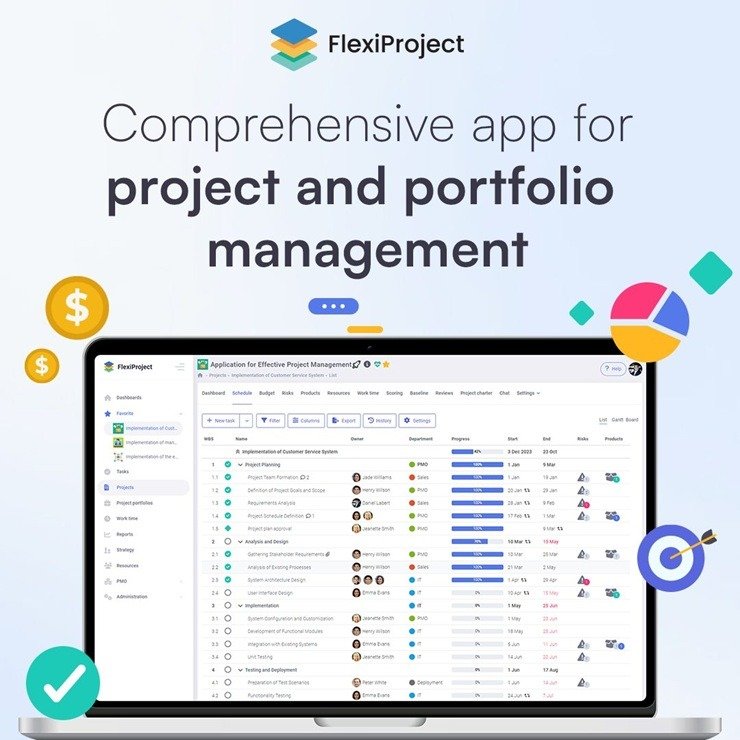
However, they are not inherently agile, nor do they replace the need for real-time task coordination, prioritization, and adaptive execution. The most effective teams treat Gantt charts as one instrument in a broader toolkit, using them where structure matters most and supplementing them with workflows that support day-to-day responsiveness. The key to getting Gantt charts to work – and to avoid when they don’t – lies in matching tool to context, rather than forcing context to fit the tool. That is how disciplined planning and flexible execution can coexist – and drive sustained project success.










How AI Is Changing Video Editing: From Chat-Based Instructions to Finished Content

Why Continuing Education Matters for Massage Therapists

A Career Direction Is a Hypothesis, Not a Verdict

How AI Image Generators Are Changing the Way You Create Visual Content

How To Choose A Vehicle That Fits Your Life

From Side Hustle to Internet Phenomenon: Why Foot Content Became an Online Business

Gut Health Supplements: What Actually Rebuilds Digestion with Ayurveda

How B2B Procurement Technology Builds Stronger Supplier Networks

How to Buy Pre-IPO Stock in 3 Steps

A Closer Look At The New Z library Official Domain In 2026

100 Motivational Quotes to Inspire You in 2026

How to Create a Vision Board That Actually Works (2026)

22 Best Self-Help Books to Read in 2026

How to Achieve Personal Growth in 2026

New Year Wishes and Quotes to Inspire and Celebrate (2026)

Loeb Smith reviews: Why Crypto Licensing Demands Patience, Structure, and Skepticism

Custom Cover Letter Generator: Create Tailored Letters in Minutes

How to Leverage Personal Development for Career Advancement

Top Fitness Coach Certification Programs for Aspiring Trainers

From Denver to Vail: Secrets, Snow, and Soul of the Rockies
-

 Motivation6 years ago
4 Fun New Hobbies To Try This Year
-

 Quotes3 years ago
53 Motivational Gym Quotes to Fuel Gym Workout
-

 Quotes11 years ago
50 Most Powerful Quotes Ever Spoken
-

 Travel2 years ago
Why You Should Travel More: The Many Benefits of Seeing the World
-
 Quotes9 months ago
100 Motivational Quotes to Inspire You in 2026
-

 Quotes2 years ago
43 Inspirational Quotes About Thoughts
-

 Quotes4 years ago
Motivational Quotes by Famous People
-

 Quotes1 year ago
100 Motivational Quotes to Start Your Day with Positivity