
Crypto
How Virtual Crypto Cards Simplify USDT Spending

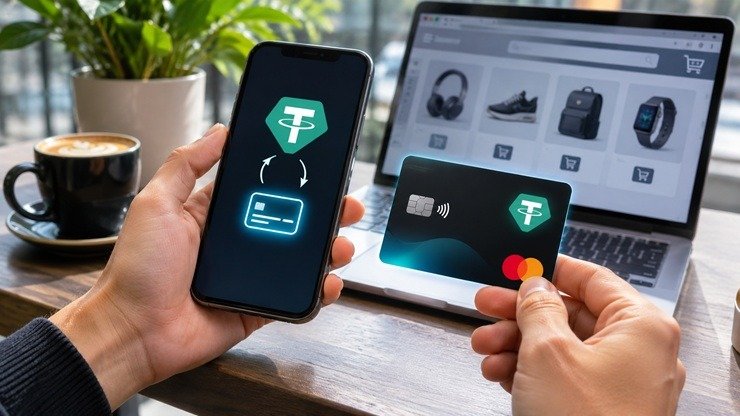
A payment in USDT can feel like money that’s ready for any checkout. It isn’t: a grocery store’s card terminal doesn’t automatically accept a token held in a crypto wallet. For a freelancer balancing client revisions, errands, and household bills, that gap creates another task in an already crowded day.
The practical idea behind “WaldenPay Explains How Virtual Crypto Cards Simplify USDT Spending” is straightforward: cryptocurrency can fund a card balance before a purchase happens. The useful part isn’t another payment app. It’s having a predictable way to move a planned amount from earnings into everyday spending.
What Is the Loading Process Behind “WaldenPay Explains How Virtual Crypto Cards Simplify USDT Spending”?
The loading process converts supported cryptocurrency into a card balance, which then pays for purchases through the card network.
That timing matters. With this model, the grocery purchase doesn’t trigger a new USDT transfer from the freelancer’s personal wallet. The crypto has already become card balance during loading. At checkout, the merchant processes a card payment rather than receiving tokens.
For example, WaldenPay’s crypto virtual card illustrates this loading-time conversion model, with funding available through 135+ cryptocurrencies across 35+ networks. Its virtual card is issued after funding, and the card details can be used online or added to Apple Pay or Google Pay for in-store payments.
The distinction between an account wallet and a card balance also deserves attention. Depositing crypto into a service’s account wallet and loading a card shouldn’t be treated as interchangeable steps. The useful confirmation is the available card balance shown after loading, not simply a successful blockchain transfer.
For someone learning how to spend USDT, this creates a clear sequence: choose the amount, fund through the correct network, confirm the card balance, and then make the purchase.
When Is a Crypto Card More Useful Than an Exchange Withdrawal?
A crypto-funded card is useful when planned purchases happen at card checkouts; an exchange withdrawal is more suitable when money needs to reach a bank account.
The choice depends on the destination of the money. A freelancer’s grocery order, work software, and household supplies may all accept cards. Rent paid through a bank transfer is a different problem. Moving that money onto a virtual card could add a step without solving the payment requirement.
| Route | What happens | Best practical fit |
|---|---|---|
| Virtual crypto card | Crypto becomes card balance | Planned card purchases |
| Exchange and bank withdrawal | Crypto is sold; proceeds reach a bank | Bank-paid bills |
| Direct merchant payment | Merchant receives supported crypto | A merchant offering crypto checkout |
“WaldenPay Explains How Virtual Crypto Cards Simplify USDT Spending” is most relevant to the first route, rather than a replacement for every way of moving money.
Direct payment can make sense when a merchant accepts USDT on the sender’s network and provides clear payment instructions. But the freelancer still needs to check the payment deadline and refund process. An exchange withdrawal calls for checking sale costs, withdrawal charges, and bank-arrival timing.
The simplest route is the one that matches the bill, not necessarily the one with the fewest screens.
What Does “WaldenPay Explains How Virtual Crypto Cards Simplify USDT Spending” Look Like in a Weekly Budget?
In a weekly budget, it means loading enough for scheduled card purchases while leaving money for other obligations outside the card.
Consider an illustrative freelance editor who receives client payments in USDT and plans expenses on Sunday evening. The coming week’s card purchases are:
- $95 for groceries.
- $35 for transportation.
- $40 for work software.
- $10 for household supplies.
Those purchases total $180. An illustrative $20 cushion brings the desired available spending balance to $200. That target is separate from loading costs and the first card’s creation fee.
The virtual card features and fees guide is useful at this point because the example service charges a $10 one-time issue fee, requires a minimum $25 top-up, and starts its top-up fee at 5%. A $200 fee-assessed loading amount would therefore carry a $10 loading fee.
That calculation doesn’t establish the final spendable balance. The loading preview needs to show the amount paid, the fee, and the balance credited before confirmation.
The editor’s target remains $200 available for purchases. Funding should follow that target and the displayed total cost, rather than assuming that sending 200 USDT automatically creates $200 of usable card balance. Money reserved for rent and other non-card obligations stays outside this weekly allocation.
How Does the Funding Network Affect a USDT Top-Up?
The funding network determines which transfer route must connect the sending wallet with the receiving deposit instructions.
USDT exists on multiple networks. Selecting the token alone isn’t enough. If the receiving instructions specify USDT on Tron, the sending platform must use the matching Tron route. An Ethereum transfer isn’t interchangeable simply because both screens display USDT.
The operational detail behind “WaldenPay Explains How Virtual Crypto Cards Simplify USDT Spending” is therefore a network check before any transfer. The service provides unique account-wallet deposit addresses for each supported network, so a saved address should never replace a fresh look at the current instructions.
- Select the asset: Choose USDT in the receiving service.
- Select the network: Confirm that the sender supports that same route.
- Copy the current address: Check the pasted address against the receiving screen.
- Review the transfer: Check the amount and the sender’s displayed network or withdrawal charge.
A trial transfer can help when a destination is unfamiliar, but it should respect any displayed deposit minimum. The $25 minimum card top-up is a separate requirement; it shouldn’t be assumed to describe every wallet-deposit rule.
For the freelancer, this check belongs in the Sunday routine, not in a hurried grocery checkout line.
How Much of a USDT Payment Should Stay Outside the Card?
Money needed for non-card bills, reserves, and later spending should stay outside the weekly card allocation.
In the illustrative budget, only $200 of available card balance is needed. Loading an entire client payment would mix this week’s groceries with money intended for other purposes. It would also expose a larger amount to loading fees before there’s a spending need.
Load for the next planned spending window, not for the full size of the latest payment.
A useful label is “weekly spending,” rather than “available income.” The former has a job and a boundary. The latter can feel like permission to spend.
Among practical crypto budgeting tips, this separation is especially valuable for freelancers with uneven payment schedules. A larger invoice payment doesn’t automatically justify a larger everyday spending balance.
How Should Loading Fees Change the Weekly Spending Plan?
Loading fees should be treated as a separate budget expense, with the current fee checked before each top-up.
For the example service, the starting top-up fee is 5%, dropping automatically with rolling 30-day card spend. The confirmed tiers are 4.75% from $2,000, 4.5% from $5,000, 4.25% from $10,000, 4% from $25,000, 3.5% from $50,000, and 3% from $100,000. Individual pricing is available at $250,000 or more per month.
The fee lesson in “WaldenPay Explains How Virtual Crypto Cards Simplify USDT Spending” is about planning, not chasing discounts. The trigger is rolling card spend, so a larger deposit alone doesn’t establish eligibility for a lower tier.
For an illustrative $200 fee-assessed amount, 5% is $10 and 3% is $6. The difference is $4. Extra purchases made merely to pursue a lower fee would work against the original budget.
There is no monthly maintenance fee, while the $10 card issue fee is a one-time expense. Any sending-wallet network charge belongs on a separate line from the card top-up fee.
And several smaller loads don’t automatically reduce a percentage-based cost. If the fee basis and percentage remain unchanged, splitting an amount leaves the percentage calculation unchanged, while separate transfers may create additional sending costs.
What Happens When the Freelancer Pays Online or In Store?
The freelancer uses the funded card’s details online or a supported mobile wallet at an in-store card terminal.
On Monday, the editor’s work software renews against the available balance. Midweek, groceries are paid through Apple Pay or Google Pay. The USDT originally used for funding isn’t sent to either merchant during those purchases.
The checkout benefit described by “WaldenPay Explains How Virtual Crypto Cards Simplify USDT Spending” comes from that separation: funding is handled ahead of time, leaving an ordinary card payment for the purchase itself.
Still, a spending plan should account for how merchants collect payments. Some merchants place temporary authorizations, and tips or later adjustments can change the final total. The illustrative $20 cushion offers some room, but an unusually large hold could exceed it.
A useful check before a subscription renewal is the available balance, not only the balance remembered from the last top-up. Pending purchases may already have reduced what remains available.
The same habit helps when a payment fails. Before loading more money, the freelancer can check for a pending authorization, an incorrect billing detail, or an expired card credential. Another deposit isn’t automatically the right fix, especially when the existing balance already covers the purchase.
What Should Be Checked Before the Next Weekly Load?
The next load should be based on the remaining available balance and the upcoming purchase list, rather than repeating the previous deposit automatically.
Suppose the editor finishes the illustrative week with $30 available and expects another $180 in purchases. Keeping the same $20 cushion means restoring the balance to $200, so the required increase is $170 before accounting for loading costs.
This is where a brief weekly review pays off. Completed purchases, pending authorizations, and upcoming subscriptions belong in separate categories. A pending charge shouldn’t be treated as either forgotten spending or money freely available for something else.
The editor can also retain the funding confirmation alongside business receipts. A software receipt explains the business purchase; a loading record explains the cost of preparing the spending balance. Keeping both makes later bookkeeping less confusing.
The next action after reading “WaldenPay Explains How Virtual Crypto Cards Simplify USDT Spending” is one short calculation in a budget note: next week’s planned card purchases plus a chosen cushion, minus the existing available balance. That result becomes the target balance increase to check against the loading preview before confirming a transfer.














How Virtual Crypto Cards Simplify USDT Spending

How To Compare Houston, Texas Neighborhoods Before Buying a Home

Interactive Museums in Miami, Florida: Five Hands-On Attractions Worth Visiting

Why Short Financial Gaps Need Different Solutions

How Admissions Teams Use Viddo AI For Campus Walkthroughs

The Trouble with Being Right

Remembering With Love: Meaningful Ways to Honor Someone After Loss

5 Things to Know Before Your First Art Auction

Running Research Labs: Essential Resources to Enhance Operations

Simple Ways to Monitor the Health of Chickens and Farm Animals

100 Motivational Quotes to Inspire You in 2026

How to Create a Vision Board That Actually Works (2026)

22 Best Self-Help Books to Read in 2026

How to Achieve Personal Growth in 2026

New Year Wishes and Quotes to Inspire and Celebrate (2026)

Loeb Smith reviews: Why Crypto Licensing Demands Patience, Structure, and Skepticism

How to Choose the Best Manali Tour Package for a Family-Friendly Vacation?

Your Guide to Building the Life You Want as a Medical Professional

Romantic Cabins In Tennessee: A Guide to Location, Privacy, And Scenic Views

AI SEO Tools Every Website Owner Should Know
-

 Motivation6 years ago
4 Fun New Hobbies To Try This Year
-

 Quotes4 years ago
53 Motivational Gym Quotes to Fuel Gym Workout
-

 Quotes11 years ago
50 Most Powerful Quotes Ever Spoken
-

 Travel2 years ago
Why You Should Travel More: The Many Benefits of Seeing the World
-
 Quotes11 months ago
100 Motivational Quotes to Inspire You in 2026
-

 Quotes3 years ago
43 Inspirational Quotes About Thoughts
-

 Quotes4 years ago
Motivational Quotes by Famous People
-

 Quotes1 year ago
100 Motivational Quotes to Start Your Day with Positivity