
Lifestyle
Solid Wood vs Plywood vs MDF in Bathrooms: What Actually Lasts

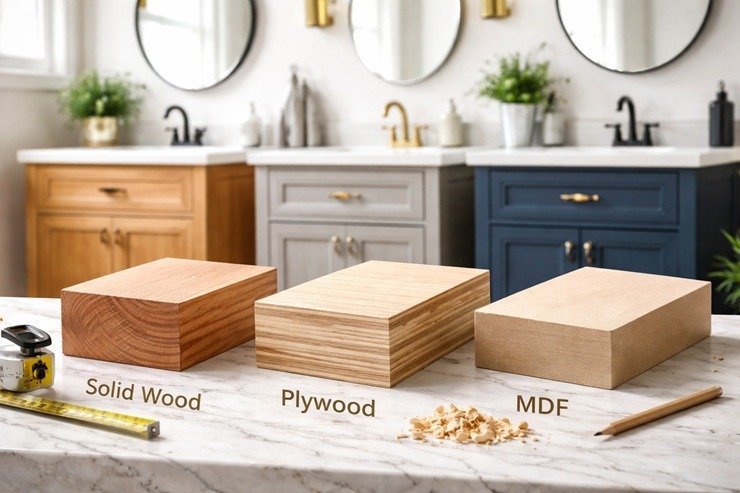
Buying a bathroom vanity feels like it should be straightforward. You pick a style, a size, maybe a countertop, and you’re done. Then you start reading product descriptions and it turns into a debate that never ends: solid wood versus plywood versus MDF. One person says “solid wood is the only real option.” Another says “plywood is actually better.” Someone else insists MDF is fine if it’s sealed. If you’ve ever tried to make sense of that argument, you’ve probably noticed something: everyone sounds confident, and half of them contradict each other.
If you’re shopping for a solid wood bathroom vanity, you’re likely chasing a specific promise: durability, quality, and that heavy, furniture-like feel. Those are valid goals. But the part most people miss is that bathrooms are not normal rooms. The best-performing material is not always the most “premium sounding” one. In a bathroom, stability matters as much as strength, and the finish system often matters more than the core material. Let’s break this down in practical terms, without brand bias and without marketing language.
Why the bathroom is a different environment
The bathroom is basically a stress test for furniture. It’s not just water splashes. It’s repeated cycles of humidity and drying, heat from showers, cool air when the fan kicks on, and temperature swings that happen daily. Even if your vanity never gets directly soaked, the air around it changes constantly. That expansion and contraction is what causes many of the problems people complain about: doors that stop lining up perfectly, drawers that start rubbing, paint that cracks at seams, and edges that look swollen.
Two bathrooms in the same house can behave very differently. A guest powder room with a sink and no shower is one of the easiest environments a vanity can live in. A small bathroom used by a family where kids splash water and the shower runs twice a day is much harsher. A primary bath where the shower is basically a steam generator is harsher still. When people argue about materials online, they’re often describing different bathrooms without realizing it.
How solid wood “moves” and what it does to geometry and paint
Solid wood is strong. It can also be unpredictable in humidity. Wood is a natural material that absorbs and releases moisture from the air. As humidity rises, wood expands. As it dries, it contracts. This movement is normal, but it can cause issues when wood is forced to stay perfectly square and stable in a cabinet that’s expected to align with a countertop, plumbing, and doors.
The bigger the surface, the more noticeable the movement can be. Wide solid wood panels are more likely to cup or warp than narrower pieces. That’s why high-quality cabinet construction often avoids large solid wood panels for cabinet boxes and uses frame-and-panel doors instead. The frame gives structure, and the panel can float slightly, reducing stress.
Paint makes the movement more visible. Many people want painted white, painted black, or painted colored vanities. Solid wood under paint can “telegraph” seams and joints over time. You might see faint lines where panels meet, or small cracks at joints. It’s not always a sign of cheap manufacturing. It can be the normal result of wood movement plus a rigid finish.
This is the first big myth to challenge: solid wood is not automatically the best choice for every part of a vanity. In fact, a vanity that uses solid wood in the wrong places can perform worse than one that uses a more stable engineered core in the cabinet box.
Why plywood is often more stable in bathrooms
Plywood is made from thin layers of wood veneer glued with alternating grain direction. That cross-laminated structure is the whole point. It reduces movement, improves stability, and helps panels resist warping compared to a similar thickness of solid wood.
In bathroom conditions, plywood’s stability is a major advantage. It tends to stay flatter, it’s less likely to twist, and it handles changes in humidity more predictably. That’s why you’ll see plywood used for cabinet boxes in many higher-end vanities and kitchen cabinets. When people say “plywood is better than solid,” they usually mean for the cabinet box, not for decorative door frames.
Plywood also has a practical benefit: it holds fasteners well. Hinges, drawer slides, and screws tend to anchor more reliably in plywood than in many lower-density fiber products. That matters because most vanity “failures” are not dramatic structural collapses. They’re annoying functional issues: a hinge gets loose, a drawer slide starts to sag, or a screw doesn’t hold after repeated use.
That said, plywood is not magically waterproof. If water consistently reaches raw edges, especially unsealed cutouts, plywood can delaminate over time. A well-made vanity prevents this by sealing edges, using quality coatings, and designing the sink area so water isn’t constantly hitting vulnerable seams.
Where MDF makes sense and where it becomes risky
MDF is medium-density fiberboard. It’s made from wood fibers and resin pressed into dense panels. People love to hate MDF because it sounds cheap, and yes, it can fail badly if water gets into it. But MDF also has qualities that make it useful in the right application.
MDF is extremely smooth and stable. It does not have grain, knots, or natural variation. That makes it excellent for painted finishes, especially doors and panels that need to look perfectly flat. MDF is also less prone to seasonal movement than solid wood, which means painted surfaces can stay more visually consistent. This is why many painted cabinet doors in kitchens and bathrooms use MDF panels with wood frames, or MDF components in specific areas.
The risk is moisture. MDF is like a sponge if its protective coating is compromised. If the finish chips at an edge, if water sits at the bottom of a door, or if a sink leak goes unnoticed, MDF can swell, soften, and lose integrity. Once it swells, it usually doesn’t return to normal. It can turn into a permanent “puffy” edge that looks bad and can’t be sanded into shape without breaking the surface.
So the right way to think about MDF is not “good” or “bad.” It’s “sealed and protected” versus “exposed.” MDF can work very well in a powder room where there’s minimal humidity and splashing. In a busy family bathroom with wet floors and constant steam, MDF becomes higher risk unless the finish system and design are exceptionally protective.
What actually lasts: material plus design plus finish
If you want a vanity that holds up, don’t focus only on the headline claim of “solid wood.” Focus on what parts are made of what, how water is prevented from reaching vulnerable edges, and how the finish is applied.
Cabinet box stability is usually the foundation of longevity. Plywood often wins here because it stays square and stable. Door performance depends on construction: frame-and-panel doors handle movement better than solid slab doors. Painted finishes depend on both substrate and coating quality. MDF can produce a flawless painted look, but it must stay sealed. Solid wood can look rich and natural, but it may show movement over time, especially under paint.
The sink area is the danger zone for any vanity. Water hits that zone constantly. A countertop that overhangs slightly and a sink design that reduces splashing can protect the cabinet. Sealed edges and a durable topcoat matter more than whether the box is solid wood or plywood.
The “real life” scenarios: what to choose based on your bathroom
This is where the internet arguments finally become useful. Most people are right within the scenario they’re describing. The trick is matching the material choice to your bathroom’s reality.
In a steam-heavy primary bathroom, stability and resistance to humidity cycles are the priority. A plywood cabinet box with well-sealed edges is often a strong choice. Solid wood can work, but you want smart construction that avoids large solid panels in the box. Painted solid wood can show joint lines over time. A good finish and ventilation become non-negotiable.
In a family bathroom with kids and daily splashing, the danger is liquid water reaching edges and corners. A vanity with durable sealing, good edge protection, and a design that keeps water from pooling is more important than chasing a label. MDF becomes riskier here because one chip in the finish can become a swelling problem. Plywood or solid wood components generally give you more tolerance for accidents, especially if the edges are sealed well.
In a guest powder room, you can be more flexible. The environment is relatively dry, and the vanity is mostly dealing with handwashing. MDF can be perfectly acceptable here if the finish is good. Solid wood is still great if you want the furniture feel, but it’s not required for longevity in this scenario.
A simple way to decide without overthinking it
If you want a quick decision logic you can actually use, here’s the only numbered list in this article.
- If your bathroom is humid and used daily for showers, prioritize stability and sealed construction: plywood cabinet boxes and quality finishes tend to perform well
- If your bathroom is high-splash, kid-heavy, and chaotic, avoid materials that swell easily if the finish gets damaged, and focus on protected edges and durable coatings
- If your bathroom is a powder room or light-use guest bath, you can prioritize the look you want, because the environment is less punishing
- If you want a painted vanity that stays visually smooth, MDF panels can be a good substrate, but only if the edges and seams stay sealed
- If you want natural wood grain and warmth, solid wood doors and frames can look beautiful, but don’t assume the entire cabinet needs to be solid wood to be “high quality”
The bottom line: “solid” is not a guarantee
The phrase “solid wood” sounds like a shortcut to quality, and sometimes it is. But in bathrooms, the best-performing vanities are usually the ones that combine materials intelligently: stable cabinet boxes, well-built doors, sealed edges, and finishes designed for humidity. A vanity that is 100% solid wood can still warp if it’s not constructed properly or if the bathroom environment is harsh. A vanity that uses plywood and selective MDF can last beautifully if the design and finish protect it.
If you’re trying to buy once and not think about it again, don’t shop by buzzwords. Shop by construction details, finish durability, and how your bathroom actually behaves day to day. That’s what actually lasts.










Leadership Transformation in Modern Business: Moving Beyond Traditional Coaching

Homeowners: What to Look for When Choosing a Reliable Ac Repair Company in Las Vegas

Pregnant Women: Key Considerations When Seeking a Webster Technique Chiropractor

Scholarly Stars – 6 Surefire Keys To Successful Studies

Kitchen Kit-Up – The 6 Indispensable Items You Need To Get Your Kitchen Ready For Action

Exeter’s Student Housing Scene Is Expanding – What 2026 Students Should Know

How Historic Architecture Boosts Real Estate Value

Why Understanding Party Wall Agreements in Essex Is Important Before Building

Innovative Strategies for Engaging First-Grade Students in the Classroom

The Hidden Fees Eating Your Crypto Portfolio (And How to Avoid Them)

100 Motivational Quotes to Inspire You in 2026

100 Motivational Quotes to Start Your Day with Positivity

22 Best Self-Help Books to Read in 2026

How to Create a Vision Board That Actually Works (2026)

Changing Your Spending Habits

Top 50 Motivational Quotes for Success and Hard Work

How to Achieve Personal Growth in 2026

New Year Wishes and Quotes to Inspire and Celebrate (2026)

Do I Have to Pay a Debt That’s Very Old?

5 Excellent Reasons for a Healthcare Provider to Utilise the Services of a Nursing Agency
-

 Motivation5 years ago
4 Fun New Hobbies To Try This Year
-

 Quotes3 years ago
53 Motivational Gym Quotes to Fuel Your Workout
-

 Travel1 year ago
Why You Should Travel More: The Many Benefits of Seeing the World
-

 Quotes10 years ago
50 Most Powerful Quotes Ever Spoken
-
 Quotes3 months ago
100 Motivational Quotes to Inspire You in 2026
-

 Quotes2 years ago
43 Inspirational Quotes About Thoughts
-

 Quotes3 years ago
105 Motivational Quotes by Famous People
-
 Quotes9 months ago
100 Motivational Quotes to Start Your Day with Positivity