
Business Automation
Why Every Public Washroom Needs a Diaper Changing Station

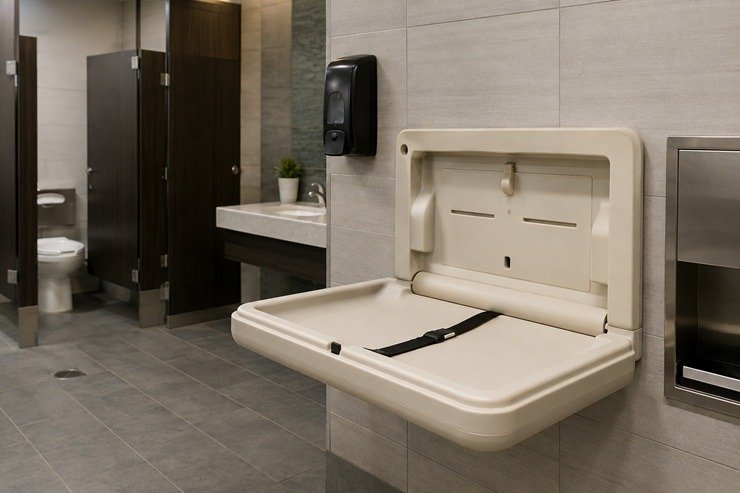
A diaper changing station is a wall-mounted, fold-down washroom fixture designed to give parents and caregivers a clean, safe, and hygienic surface to change infants in public spaces. It sounds like a minor amenity. In practice, its absence creates an immediate problem that no parent can defer.
When a diaper needs changing, it happens in the next two minutes — wherever the family happens to be. No queue, no waiting for a better option. Without a diaper changing station in the washroom, caregivers are left improvising on a floor carrying the highest bacterial load in the room, on a countertop holding standing moisture and soap residue, or on their own lap. None of those are hygienic. None are safe for the infant. And that facility just became the one that family quietly crosses off their list.
For hotels, malls, airports, and restaurants, this isn’t a courtesy feature. It’s a specification gap with a measurable commercial cost.
What Is a Diaper Changing Station and Why Does It Matter in Commercial Spaces?
A diaper changing station is a wall-mounted fold-down unit giving caregivers a clean, stable, secured surface to change infants in public washrooms. Commercial-grade units include a safety harness strap, non-porous antimicrobial surface, and liner dispenser built for a surface used by strangers dozens of times daily.
Without one, parents use the floor or the counter. A washroom floor carries the highest bacterial load in the room. Countertops near basins hold moisture and residue. Parents aren’t choosing between a station and a sterile surface. They’re choosing between the station and the floor inside your facility.
Types of Diaper Changing Stations Used in Commercial Washrooms
Horizontal Fold-Down Changing Stations: Standard Format for Most Commercial Spaces
Wall-mounted. Folds flat between uses, opens to a full horizontal surface when needed. No counter space required, no permanent footprint. Commercial-grade units carry up to 136 kg relevant because toddlers who still need changing are heavier and more mobile than newborns. Size the specification to actual use.
Vertical Fold-Down Changing Stations: The Solution for Compact and Retrofitted Washrooms
Some washrooms don’t have the horizontal clearance a standard unit needs when open. The vertical format folds upward rather than outward, cutting the footprint considerably. Restaurant cubicles, airline terminal washrooms, retrofitted commercial buildings this is where the vertical unit earns its place.
Countertop Changing Stations: Dedicated Family Room Specification Only
Sits on a counter rather than mounting to a wall. More stable, but needs dedicated space most standard washroom stalls don’t have. Belongs in standalone family rooms premium hotels, large retail centres not in shared washrooms where the counter serves other functions.
What Materials Should a Commercial Diaper Changing Station Be Made From?
The surface an infant lies on in a public washroom gets contacted by strangers across hundreds of daily uses and cleaned with inconsistent frequency. It has to handle that without becoming the contamination source it’s supposed to prevent.
Polyethylene with antimicrobial treatment is the commercial standard. Non-porous, so bacteria can’t colonise the material the way they do on textured alternatives. Microban-treated variants embed the additive into the polyethylene during manufacture antimicrobial action runs between cleaning cycles, not just after them. That matters in high-footfall settings where cleaning frequency never quite scales with usage.
Stainless steel belongs on the hardware: bracket, hinge, frame. Handles thousands of open-close cycles and washroom humidity across a five to ten-year service life. Polyethylene surface, stainless steel mechanism.
Application Areas: Which Commercial Facilities Need a Diaper Changing Station?
Hotels and hospitality venues. Family guests judge washroom quality fast. A diaper changing station in both the lobby and restaurant washrooms covers the two highest-traffic family touchpoints. Miss one and it lands in a review not because guests are looking for a reason, but because the absence is genuinely disruptive.
Shopping malls and retail destinations. A family shopping trip with an infant has a hard exit trigger. The moment the baby needs changing and there’s nowhere safe, the trip ends. Accessible, clearly signed stations extend every family visit and keep footfall in the building that would otherwise leave.
Airports and transit hubs. Travel with an infant is stressful at baseline. A station in every washroom, men’s included, removes one stressor caregivers couldn’t plan for. Facilities that skip it get flagged and those reviews don’t fade.
Restaurants. Infant needs don’t pause for a main course. A station communicates that the establishment thought about this. Its absence communicates the opposite at exactly the moment a family is least forgiving about it.
Why Men’s Washrooms Need Diaper Changing Stations as Much as Women’s Do
Most facilities restrict stations to women’s washrooms. Fathers and male caregivers get pushed into the disabled toilet removing it from the person it was built for or out to a car park.
Correct specification: a station in every washroom serving mixed footfall. Men’s, women’s, gender-neutral. One station isn’t complete.
Installation Height, Placement, and Maintenance That Actually Work
Mount at 34 to 36 inches from floor to open surface works for standing adults and wheelchair users. Place within arm’s reach of a basin. Change, wash, done. Spread those steps across the washroom and caregivers carrying an infant can’t complete them.
Disinfect the surface every cleaning cycle. Check liner dispenser stock before it empties an empty liner defeats the point of an otherwise clean station. Inspect the strap and fold mechanism quarterly. A broken strap is a safety liability, not a minor maintenance note.
The Commercial Case
Installation cost is low. The cost of losing family footfall is not.
Get it right and nobody mentions it. Get it wrong and it shows up in a review, a conversation, a decision not to return. That’s a longer tail than most facility managers expect from a single washroom specification.










How to Build an Investment Plan That Can Handle Market Swings

How Coastal Storms Overwhelm Residential Pipes During Drain Cleaning in Miami

How Skin Renewal Microneedling at Anne Therese Transforms Dull Skin

Natural Remedies Are Shaping the Next Generation of Mindful Lifestyles

What Visitors Should Know About Miami Roads, Rental Cars and Road Accidents

5 Signs You’re Not Just Busy, You’re Overwhelmed

How Hiring Emergency Water Damage Restoration Service Prevents Structural Rot

Planning a Lahore Heritage Break with Time to Explore

How Small Businesses Can Make Cross-Border Payments Faster, Clearer, and More Reliable

How Tampa Businesses Can Choose a Commercial Location

100 Motivational Quotes to Inspire You in 2026

How to Create a Vision Board That Actually Works (2026)

22 Best Self-Help Books to Read in 2026

How to Achieve Personal Growth in 2026

New Year Wishes and Quotes to Inspire and Celebrate (2026)

Loeb Smith reviews: Why Crypto Licensing Demands Patience, Structure, and Skepticism

How to Leverage Personal Development for Career Advancement

Top Fitness Coach Certification Programs for Aspiring Trainers

From Denver to Vail: Secrets, Snow, and Soul of the Rockies

How to Choose the Best Manali Tour Package for a Family-Friendly Vacation?
-

 Motivation6 years ago
4 Fun New Hobbies To Try This Year
-

 Quotes4 years ago
53 Motivational Gym Quotes to Fuel Gym Workout
-

 Quotes11 years ago
50 Most Powerful Quotes Ever Spoken
-

 Travel2 years ago
Why You Should Travel More: The Many Benefits of Seeing the World
-
 Quotes10 months ago
100 Motivational Quotes to Inspire You in 2026
-

 Quotes3 years ago
43 Inspirational Quotes About Thoughts
-

 Quotes4 years ago
Motivational Quotes by Famous People
-

 Quotes1 year ago
100 Motivational Quotes to Start Your Day with Positivity