
Travel
Why Travellers Are Falling in Love with Europe’s Smaller Cultural Destinations

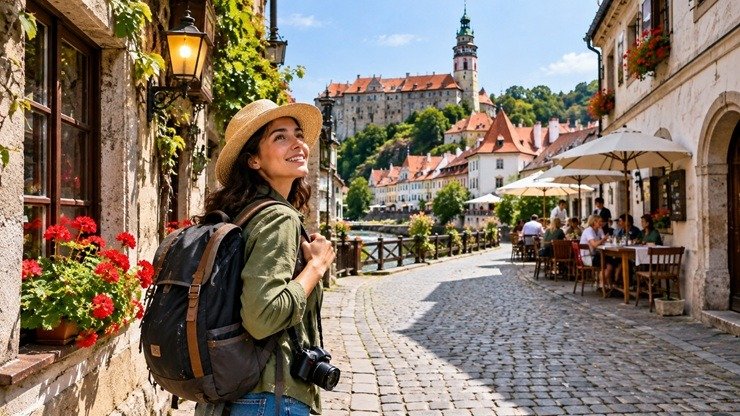
Europe’s cultural map extends far beyond its famous capitals. Some of the continent’s most rewarding journeys lead instead to smaller cities where history, art and local life can be experienced within a few days and largely on foot. Matera, Ravenna, Girona, Guimarães, Bruges and Český Krumlov offer very different reasons to visit, from cave settlements and Byzantine mosaics to medieval streets and centuries-old trading centres. Their appeal is not simply that they are smaller or quieter than major capitals. It lies in the way culture remains concentrated and easy to approach. Rather than crossing a metropolis from one landmark to another, travellers can spend more time observing the details that give each destination its character.
Why is Matera one of Italy’s most distinctive cultural destinations?
Matera is shaped by an unusual relationship between architecture and landscape. Its best-known districts, the Sassi, developed around natural caves in the limestone terrain and contain homes, churches and other spaces created partly within the rock.
Together with the Park of the Rupestrian Churches, the Sassi form a UNESCO World Heritage Site that reflects a long history of human settlement and adaptation to the local environment.
Matera is best explored slowly because much of its character is found between individual landmarks. Stairways, narrow passages and viewpoints constantly change the perspective over the ravine. Spending some nights at a Matera luxury retreat also makes it possible to experience the historic districts early and late in the day, rather than seeing them only during a brief stop.
What makes Ravenna essential for travellers interested in art?
Ravenna offers one of Italy’s richest cultural experiences on a surprisingly manageable scale. Its international importance rests above all on its Early Christian monuments and mosaics, several of which are protected as a UNESCO World Heritage Site.
Inside buildings such as the Basilica of San Vitale and the Mausoleum of Galla Placidia, mosaics transform relatively restrained interiors through gold, intense colour and complex religious imagery. The experience feels very different from visiting a large museum because the works remain closely connected to their architectural setting.
The city itself is compact enough to encourage walking between monuments. Ravenna proves that extraordinary art does not require a monumental city around it.
Why should Girona be considered for a cultural weekend in Spain?
Girona combines a strong sense of history with the ease of a smaller city. Its old centre rises above the River Onyar in a network of stone streets, stairways and small squares that rewards exploration without a strict route.
The medieval Jewish quarter, known as the Call, is among the best-known parts of the historic centre. The cathedral, Arab Baths and surviving city walls add further layers to a destination shaped by Roman, medieval and later history.
Girona also works well because culture does not dominate every hour. Markets, restaurants and neighbourhood streets create a natural pause between historic sites. A weekend can move easily between architecture, food and ordinary city life, without the sense of constantly travelling between attractions.
What does Guimarães reveal about Portuguese history?
Guimarães occupies an important place in the history of Portugal. Its development is closely connected with the formation of Portuguese national identity in the 12th century, while the surviving historic centre shows how the medieval settlement evolved over later centuries.
Granite buildings, old squares and traditional houses give the centre a remarkably coherent appearance. The UNESCO World Heritage area also includes the Couros Zone, historically associated with leather tanning and the working life of the city.
This combination is what makes Guimarães especially interesting. Castles and churches tell one part of its story, while former industrial spaces reveal another. The city can therefore be read through both national history and everyday urban development.
Why is Bruges more than its famous canals?
Bruges is immediately recognisable for canals, stepped façades and medieval streets, but its cultural importance reaches beyond its appearance. During the Middle Ages, the city became a major commercial centre, connecting merchants and goods from different parts of Europe.
That prosperity supported art and architecture, leaving churches, civic buildings and collections that still explain the city’s historic importance. Flemish painting is particularly significant, and works associated with masters such as Jan van Eyck provide a deeper reason to visit than the familiar canal views alone.
Bruges benefits greatly from an overnight stay. Once many daytime visitors leave, its historic streets take on a calmer character. The city becomes easier to appreciate as a living historic centre rather than simply a beautiful backdrop.
What makes Český Krumlov worth more than a day trip?
In the Czech Republic, Český Krumlov occupies a dramatic setting around a bend in the Vltava River. Its historic centre sits below an extensive castle complex, creating one of Central Europe’s most recognisable small-city landscapes.
Its compact size makes walking easy, but this can also encourage visitors to move through it too quickly. Staying longer allows time for the castle, churches and quieter streets beyond the principal viewpoints.
The relationship between river, town and castle is central to the experience. From above, the structure of the settlement becomes clear; at street level, Renaissance and Baroque buildings reveal how the town changed over centuries. It is a destination that benefits from being seen repeatedly from different angles.
How many days should you spend in a smaller cultural city?
Two or three nights are often enough to understand the scale of these destinations without reducing them to quick stops. A longer stay is particularly worthwhile when museums, historic buildings and nearby landscapes are part of the plan.
The advantage is flexibility. There is usually no need to organise every hour in advance. One major museum or monument can anchor the morning, leaving the afternoon for walking, food or an unexpected visit.
This slower rhythm is particularly valuable in places where the historic centre itself is one of the main attractions. Time spent between monuments can be just as revealing as time spent inside them.
None needs to compete with Paris, Rome or London. Their attraction comes from offering another scale of cultural travel—one where fewer kilometres and fewer obligatory sights can create more time to understand where one actually is.











Why Travellers Are Falling in Love with Europe’s Smaller Cultural Destinations

Building Emotional Resilience Helps Individuals Overcome Sudden Traumatic Setbacks

How to Control AI Claims Automation Costs as Review Volumes and Exceptions Grow

The Mood-Friendly Day: Small Habits for a Steadier, Calmer You

How To Turn One Blog Post Into A Week Of Useful Content

How to Maintain Health and Independence While Ageing in Place

How Australian Businesses Can Overcome Skill Shortages Through Global Recruitment

Electric Scooter On-road Price vs Ex-showroom Price: Understanding the Actual Cost of Purchase

GiftMusic Review: Is a Personalized Song Worth It?

Shipping Decisions Every New Online Store Should Make Before Launch Day

100 Motivational Quotes to Inspire You in 2026

How to Create a Vision Board That Actually Works (2026)

22 Best Self-Help Books to Read in 2026

How to Achieve Personal Growth in 2026

New Year Wishes and Quotes to Inspire and Celebrate (2026)

Loeb Smith reviews: Why Crypto Licensing Demands Patience, Structure, and Skepticism

From Denver to Vail: Secrets, Snow, and Soul of the Rockies

How to Choose the Best Manali Tour Package for a Family-Friendly Vacation?

Your Guide to Building the Life You Want as a Medical Professional

Romantic Cabins In Tennessee: A Guide to Location, Privacy, And Scenic Views
-

 Motivation6 years ago
4 Fun New Hobbies To Try This Year
-

 Quotes4 years ago
53 Motivational Gym Quotes to Fuel Gym Workout
-

 Quotes11 years ago
50 Most Powerful Quotes Ever Spoken
-

 Travel2 years ago
Why You Should Travel More: The Many Benefits of Seeing the World
-
 Quotes10 months ago
100 Motivational Quotes to Inspire You in 2026
-

 Quotes3 years ago
43 Inspirational Quotes About Thoughts
-

 Quotes4 years ago
Motivational Quotes by Famous People
-

 Quotes1 year ago
100 Motivational Quotes to Start Your Day with Positivity