
Tech
How to Control AI Claims Automation Costs as Review Volumes and Exceptions Grow

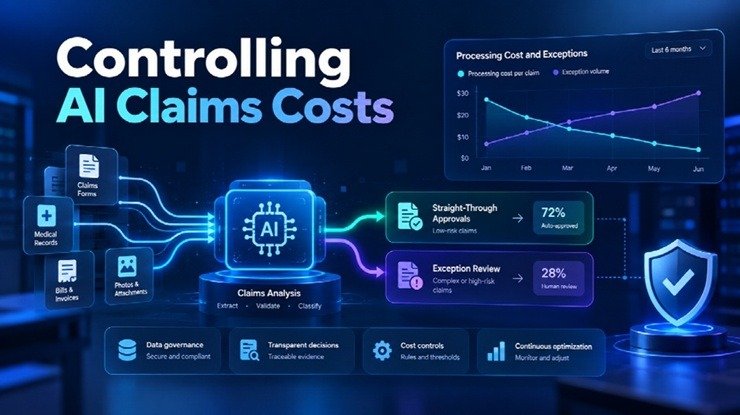
In an insurance process, an insurer can automate claim intake and document extraction. As submissions increase in volume – the cracks tend to show. Damaged photographs, missing forms, and conflicting policy information send more cases to adjusters for an approval. These exceptions at times increase the work beyond the automation budget – which was planned in the first place to reduce the overall workload.
This is why Insurers need to measure completed-claim costs and control review effort without compromising claim decisions.
What Drives AI Claims Automation Costs as Volume Increases?
Claims processing uses document extraction, AI models, infrastructure, and connections with policy and payment systems. Charges may depend on processed pages, model input size, or service requests. Repeated analysis increases usage.
Exceptions introduce another set of costs. An unreadable invoice can require resubmission, a second extraction attempt, and adjuster review. Coverage conflicts and fraud alerts require specialist review.
An AI app development cost guide explains development, integration, testing, and maintenance expenses. Claims budgets must cover operating costs.
To calculate cost per completed claim, total the direct processing and review costs for completed claims plus an allocated share of software, infrastructure, and support expenses. Divide that amount by the number of completed claims. Track spending on open claims as a separate measure until closure. Compare groups with similar claim types and complexity.
| Cost driver | What to measure | Control to evaluate |
| Document processing | Pages processed and extraction retries per claim. | Validate file formats and detect duplicate submissions before processing. |
| Model usage | Requests, input size, and charges by claim category. | Set task limits and select models suited to the required analysis. |
| Human review | Adjuster minutes, queue age, and reasons for escalation. | Route cases by evidence gaps, risk, and policy rules. |
| Rework and disputes | Corrections, reopened claims, appeals, and associated staff time. | Investigate error patterns and retest workflow changes. |
Review these measures with cycle times, disputes, and accuracy. A lower model bill has limited value if review queues or reopened claims consume the savings.
Which Changes Can Reduce Review and Exception Costs?
While there might be a myriad of changes one can do based on their business concerns and processes, these are some of the most commonly considered changes when it comes to reducing review and exception-handling costs:
Validate inputs before AI processing. Check document completeness, file quality, duplicate attachments, and required identifiers. Route missing-evidence requests to staff. Reserve model calls for tasks that require interpretation.
Separate exception types. A missing signature needs a different response from a coverage dispute or suspected fraud. Routing rules should show the reason for escalation and assign work to reviewers with the required authority.
Control retries and usage. Set limits for repeated extraction, flag recurring failures, and identify high-cost steps by claim category. Alerts should identify the source of increased spending.
Test changes against claim outcomes. Use representative historical cases, including disputed claims and low-quality documents. Compare estimated processing charges, staff minutes, false alerts, and correction rates before approving an updated workflow.
Insurers should assess cost reductions against claim accuracy, dispute rates, review quality, and access to appeals. The National Association of Insurance Commissioners’ AI Model Bulletin describes governance and documentation expectations; applicable obligations depend on the jurisdiction. Claim records should preserve evidence, review decisions, and approvals while protecting personal information.
5 Engineering Companies to Evaluate for Claims Automation Cost Control
These companies publish insurance, AI, or product engineering services relevant to claims workflows. Their public portfolios do not establish specific savings in exception handling or processing costs.
1. GeekyAnts
GeekyAnts is an AI-Powered Digital Product Engineering & Consulting Company. Its insurance services cover claims and policy platforms, AI-supported assessment, fraud-related workflows, and connections with insurance systems. The company offers product engineering, testing, cloud development, and application modernization. This scope is relevant to insurers combining document intake with case routing and human review. A delivery plan can define cost attribution, exception reporting, model usage limits, and quality checks, with the insurer retaining responsibility for claims decisions and operating policies.
Clutch Rating: 4.9 (120 reviews)
Address: GeekyAnts Inc, 315 Montgomery Street, 9th and 10th floors, San Francisco, CA 94104, USA
Phone: +1 845 534 6825, Email: info@geekyants.com, Website: www.geekyants.com/en-us
2. Kellton
Kellton offers AI engineering, application modernization, cloud services, and integration for financial-services and insurance organizations. Its published work addresses claims workflows, information handling, and insurance platform connections. These capabilities relate to the effort involved in moving cases from automated intake to adjuster review. For a claims project, the proposed system should distinguish document defects, policy conflicts, and risk alerts so operations teams can measure the volume, handling time, staffing needs, and cost of each exception category.
Clutch Rating: 4.7 (54 reviews)
Address: Plot No. 1367, Road No. 45, Jubilee Hills, Hyderabad, Telangana 500033, India
Phone: +91 124 469 8900
3. Citrusbug Technolabs
Citrusbug Technolabs develops AI applications, insurance software, and systems for document processing and workflow automation. Its insurance services cover claims-related operations, validation, and integrations with business applications. These capabilities are relevant to claims teams dealing with unreadable files and repeat extraction attempts. The engineering scope can include file format checks, duplicate detection, and error routing before documents reach claims reviewers. Buyers should define acceptable extraction errors and the process for correcting documents that fail validation.
Clutch Rating: 4.7 (49 reviews)
Address: 1 Pierce Pl, Ste 280C, Itasca, IL 60143, USA
Phone: +1 510 561 8188
4. Robosoft Technologies
Robosoft Technologies provides digital product engineering, application testing, data services, and cloud software development. Its services include AI integration and engineering for connected applications. This experience is relevant to insurers linking customer claim-submission interfaces with document services and claims platforms. The engineering assessment can focus on failed uploads, interface errors, monitoring, and release testing. Those controls help teams identify whether a software change increases manual intervention or sends claims back to an earlier processing stage.
Clutch Rating: 4.7 (26 reviews)
Address: 217, NH 66, Santhekatte, Udupi, Karnataka 576105, India
Phone: +91 820 2593930
5. TRooTech Business Solutions
TRooTech Business Solutions develops custom insurance platforms, AI applications, and connected business systems. Its insurance offering covers claims workflows, document management, and process automation. These services are relevant to carriers measuring the staff work required to resolve exceptions and reopened cases. A claims platform can record processing attempts, review assignments, corrections, and completion status for reporting. The project scope should identify which systems supply these records and how operations teams will reconcile staff effort with processing charges.
Clutch Rating: 4.6 (20 reviews)
Address: 605, 6th Floor, B Square-I, Iscon-Ambli BRTS Road, near Neptune House, Ahmedabad, Gujarat 380058, India
Phone: +91 2717 442 986
What Should Insurers Ask an Engineering Partner to Demonstrate?
A useful demonstration should cover a complete claim, a missing document, a coverage conflict, and a suspected fraud alert. Reviewers should see model requests, exception assignments, staff time assumptions, and estimated processing costs for each scenario. The provider should explain the calculation and identify the expenses excluded from the estimate.
Insurers comparing insurance software development services should define acceptance criteria for extraction quality, routing decisions, recoverable failures, reporting, and support ownership.
Final Thoughts
Controlling AI claims automation costs requires a view of the claims process from intake through resolution. Document charges and model usage form part of the expense, while repeated processing, adjuster work, disputes, and unfinished cases influence the full operating cost. Insurers need a consistent method for attributing expenses to completed claims and tracking work that remains open.
Cost controls should address known failure patterns. Input checks can reduce unusable submissions, routing rules can organize exception queues, and testing can reveal the review work caused by changes in AI behavior. Claims leaders should compare spending with accuracy, decision quality, and appeal outcomes. That evidence supports cost decisions without weakening the review process or the safeguards owed to policyholders.














Why Travellers Are Falling in Love with Europe’s Smaller Cultural Destinations

Building Emotional Resilience Helps Individuals Overcome Sudden Traumatic Setbacks

How to Control AI Claims Automation Costs as Review Volumes and Exceptions Grow

The Mood-Friendly Day: Small Habits for a Steadier, Calmer You

How To Turn One Blog Post Into A Week Of Useful Content

How to Maintain Health and Independence While Ageing in Place

How Australian Businesses Can Overcome Skill Shortages Through Global Recruitment

Electric Scooter On-road Price vs Ex-showroom Price: Understanding the Actual Cost of Purchase

GiftMusic Review: Is a Personalized Song Worth It?

Shipping Decisions Every New Online Store Should Make Before Launch Day

100 Motivational Quotes to Inspire You in 2026

How to Create a Vision Board That Actually Works (2026)

22 Best Self-Help Books to Read in 2026

How to Achieve Personal Growth in 2026

New Year Wishes and Quotes to Inspire and Celebrate (2026)

Loeb Smith reviews: Why Crypto Licensing Demands Patience, Structure, and Skepticism

From Denver to Vail: Secrets, Snow, and Soul of the Rockies

How to Choose the Best Manali Tour Package for a Family-Friendly Vacation?

Your Guide to Building the Life You Want as a Medical Professional

Romantic Cabins In Tennessee: A Guide to Location, Privacy, And Scenic Views
-

 Motivation6 years ago
4 Fun New Hobbies To Try This Year
-

 Quotes4 years ago
53 Motivational Gym Quotes to Fuel Gym Workout
-

 Quotes11 years ago
50 Most Powerful Quotes Ever Spoken
-

 Travel2 years ago
Why You Should Travel More: The Many Benefits of Seeing the World
-
 Quotes10 months ago
100 Motivational Quotes to Inspire You in 2026
-

 Quotes3 years ago
43 Inspirational Quotes About Thoughts
-

 Quotes4 years ago
Motivational Quotes by Famous People
-

 Quotes1 year ago
100 Motivational Quotes to Start Your Day with Positivity