
Business
Building a Sustainable Food Supply Chain: Lessons from the Artisan Cheese Industry

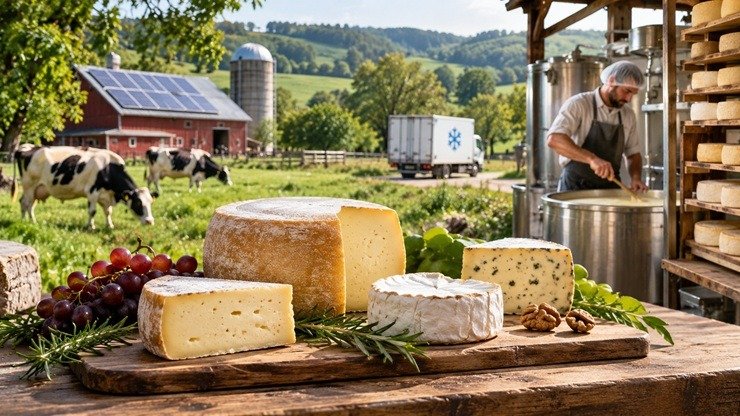
Most conversations about sustainable supply chains focus on packaging, carbon emissions, or logistics software. But there is a quieter revolution happening in the world of artisan food, one that offers surprisingly practical lessons for anyone trying to build a supply chain that actually lasts. The artisan cheese industry, with its deep roots in regional agriculture and traditional craftsmanship, has been quietly solving problems that modern food businesses are only now beginning to grapple with. As we move through autumn 2026, with global food systems under increasing pressure, it is worth taking a closer look at what this industry has figured out, and how those lessons can be applied far beyond the cheese counter.
Why artisan food production gets sustainability right
The artisan food sector operates on principles that large-scale food manufacturers are only beginning to adopt. Short supply chains, direct relationships with farmers, and a commitment to seasonal production are not marketing strategies in this world. They are operational necessities. Artisan producers cannot afford to source ingredients from the other side of the world and maintain quality. This constraint, which might seem like a disadvantage, turns out to be one of the most powerful drivers of sustainable practice. When your product depends on the quality of milk from a specific region, you become deeply invested in the health of that region’s soil, water, and farming community. That kind of accountability is difficult to replicate in a globalised supply chain, but it is exactly what sustainability frameworks are trying to achieve.
Traceability as a foundation, not a feature
One of the most transferable lessons from the artisan cheese world is the role of traceability. For a traditional cheesemaker, knowing exactly which farm supplied the milk for a specific batch is not a compliance exercise. It is fundamental to the product itself. This level of transparency creates a feedback loop that improves quality at every stage of the supply chain. When something goes wrong, the source is identifiable within hours. When something goes right, the practice can be replicated and rewarded. Working with a trusted cheese supplier Remijn illustrates this principle well: long-term partnerships built on transparency and shared standards produce better outcomes than transactional relationships based purely on price. This is a model that any food business, regardless of scale, can learn from and adapt.
Seasonal rhythms and supply chain resilience
Autumn is traditionally one of the most important seasons in dairy farming. Milk composition changes as cattle shift from summer pasture to autumn feed, and experienced cheesemakers adjust their processes accordingly. This responsiveness to natural cycles is something that industrial food supply chains have largely engineered away, often at significant cost to both quality and resilience. When a supply chain is designed to deliver identical products year-round regardless of seasonal conditions, it becomes brittle. The artisan approach, which embraces seasonal variation rather than fighting it, produces supply chains that are inherently more adaptable. In a year when climate disruption is affecting harvests across Europe, that adaptability is not a luxury. It is a competitive advantage that more food businesses need to take seriously.
Local sourcing and the economics of trust
There is a common assumption that local sourcing is more expensive than global sourcing, and in purely transactional terms, this is sometimes true. But this calculation ignores the hidden costs of long supply chains: quality degradation, logistical complexity, reputational risk, and the erosion of supplier relationships over time. The artisan cheese industry demonstrates that investing in local sourcing and long-term supplier partnerships generates returns that do not always appear on a standard balance sheet. Reduced waste, higher product consistency, stronger brand credibility, and greater supply security are all outcomes that flow from treating suppliers as partners rather than vendors. These principles apply equally whether you are sourcing milk for a farmhouse gouda or raw materials for a construction project. The economics of trust, it turns out, are remarkably consistent across industries.
What the building sector can take from the cheese world
It might seem like a stretch to draw lessons from cheesemaking for an industry like construction or sustainable building. But the parallels are genuine. Both sectors are grappling with the challenge of building supply chains that are transparent, resilient, and aligned with long-term environmental goals. Both are under pressure to reduce waste, shorten supply routes, and demonstrate accountability to end users. The artisan food industry has been navigating these challenges for decades, often without the benefit of sophisticated technology or large budgets. The lesson is not to copy the cheese industry’s methods directly, but to adopt its underlying philosophy: prioritise relationships over transactions, embrace the constraints of your local environment, and build systems that are designed to last rather than simply to scale. That is a blueprint worth following, whatever you happen to be building.













Mortgage Fraud Red Flags Homebuyers Should Check Before Closing

Building a Sustainable Food Supply Chain: Lessons from the Artisan Cheese Industry

Clear HR Policies and Early Intervention are Reshaping Workplace Risk Management

Myths About Dermaplaning That You Should Ignore

How to Rebuild Your Daily Routine After a Serious Injury

How Virtual Crypto Cards Simplify USDT Spending

How To Compare Houston, Texas Neighborhoods Before Buying a Home

Interactive Museums in Miami, Florida: Five Hands-On Attractions Worth Visiting

Why Short Financial Gaps Need Different Solutions

How Admissions Teams Use Viddo AI For Campus Walkthroughs

100 Motivational Quotes to Inspire You in 2026

How to Create a Vision Board That Actually Works (2026)

22 Best Self-Help Books to Read in 2026

How to Achieve Personal Growth in 2026

New Year Wishes and Quotes to Inspire and Celebrate (2026)

Loeb Smith reviews: Why Crypto Licensing Demands Patience, Structure, and Skepticism

Your Guide to Building the Life You Want as a Medical Professional

Romantic Cabins In Tennessee: A Guide to Location, Privacy, And Scenic Views

AI SEO Tools Every Website Owner Should Know

What to Put in Diaper Bag: The Ultimate Checklist for Parents on the Go All the Time
-

 Motivation6 years ago
4 Fun New Hobbies To Try This Year
-

 Quotes4 years ago
53 Motivational Gym Quotes to Fuel Gym Workout
-

 Quotes11 years ago
50 Most Powerful Quotes Ever Spoken
-

 Travel2 years ago
Why You Should Travel More: The Many Benefits of Seeing the World
-
 Quotes11 months ago
100 Motivational Quotes to Inspire You in 2026
-

 Quotes3 years ago
43 Inspirational Quotes About Thoughts
-

 Quotes4 years ago
Motivational Quotes by Famous People
-

 Quotes1 year ago
100 Motivational Quotes to Start Your Day with Positivity