
Health
Cinnamon, Green Tea and Ginger: What Everyday Kitchen Staples Can Do for Metabolic Health

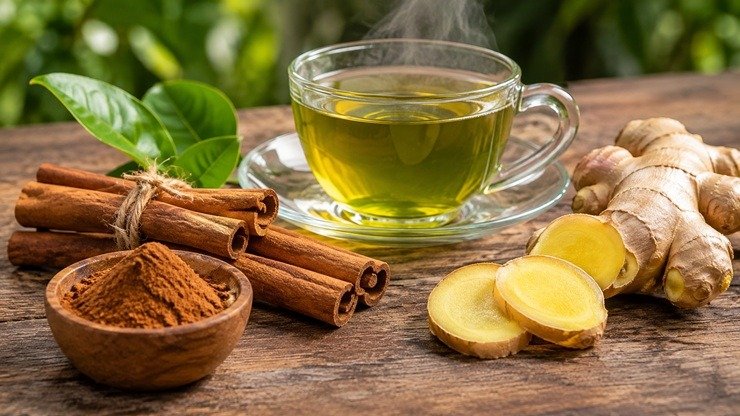
A spice shelf behaves a lot like the noticeboard in a clinic waiting room. Everything pinned to it arrives with a reputation, and the reputation travels faster than the paperwork behind it. Cinnamon, green tea and ginger have been carried a long way on theirs. One is said to steady blood sugar, one to melt fat, one to do a little of both.
Behind the shelf-talk sit small trials and the meta-analyses that pool them. A meta-analysis only works as well as the trials fed into it, and the trials on kitchen staples differ in design, preparation and quality. The pooled reviews say something narrower than the headlines about them, and the distance between the two is where the story lives.
Where the shelf’s reputation comes from
There is nothing wrong with a kitchen staple being a kitchen staple. The trouble starts when the reputation gets repackaged. You see it in a forwarded message about a morning drink, or on a wellness stall with a hand-lettered sign, long before you see it in a journal. Ginger tea becomes a capsule, the capsule becomes a “metabolic blend”, and the blend turns up wearing a name borrowed from a prescription injection.
The US FDA has warned that many weight-loss teas, pills and fat burners sold as all-natural supplements are contaminated with hidden drug ingredients, and that the agency’s own notification list captures just a sliver of the tainted products in circulation. The word “natural” on a label is therefore not a safety statement, and it frames every claim about what “natural Ozempic” products really offer. Laboratory testing at the FDA has turned up sibutramine and phenolphthalein inside weight-loss products sold as supplements. India suspended sibutramine in 2010 and prohibited it in 2011 through Section 26A of the Drugs and Cosmetics Act 1940, so a product containing it has no lawful place on an Indian shelf, whatever the front of the bottle says.
Cinnamon, green tea and ginger as ordinary foods sit a long way from all of that. They deserve to be judged on their own evidence, which is thinner than the shelf-talk and more interesting.
Cinnamon: mixed trials and a firm word from the NIH
Pooled trials of cinnamon send a mixed signal. One 2019 meta-analysis found no significant change in HbA1c. Another, also from 2019, saw weight, BMI and waist measurements stay put. Neither hands a person with prediabetes or type 2 diabetes a reason to lean on the spice jar.
Neither is a verdict that cinnamon does harm, either. The point is narrower: the pooled trials did not find the steady HbA1c or weight effect that the shelf-talk promises.
The NIH’s NCCIH goes further. Its reading is that no research backs cinnamon as a treatment for any condition, and that trials in type 1 and type 2 diabetes did not find the supplements useful for blood sugar. A Cochrane review landed in the same place, judging cinnamon to do no better than a placebo, another drug or no treatment on glucose or HbA1c.
Picture a cinnamon stick in a pot of masala chai. It is warming, it is ordinary, and it belongs in the kitchen. The questions start in the supplement aisle, where the stick becomes a capsule with a promise printed on it.
Green tea and the weight question
Cochrane’s review of green tea preparations in adults with overweight or obesity, published in 2012, found a small, statistically non-significant weight loss that was not likely to be clinically important. It also found no effect on keeping weight off afterwards. A fat-burning reputation has to survive that sentence, and it does not. The review measured weight in people trying to lose it. It says nothing against a cup of green tea drunk because you like the taste.
Brewed tea and concentrated extract are different products with different safety files. EFSA’s 2018 opinion judged catechins from brewed green tea generally safe. The same opinion found that supplements delivering high daily doses of the catechin EGCG were tied to a clear rise in liver enzymes (serum transaminases, a sign of liver injury), and EFSA could not name a dose of supplement that was safe. Rare idiosyncratic liver injury has also been reported with infusions, and the UK COT considers EFSA’s conclusions still applicable.
If you drink green tea, you are making a choice about taste and routine. If you buy an extract, you are making a different choice, and the liver data are the reason to make it with a doctor involved.
Ginger: small trials, supplement doses
Ginger’s file reads more encouragingly than cinnamon’s, within limits. Small meta-analyses in people with type 2 diabetes report lower fasting glucose and lower HbA1c with ginger supplements, and one analysis found no fasting-glucose effect at all. Blood lipids did not move. When pooled reviews of the same root cannot agree on something as basic as fasting glucose, the claim is still unsettled.
High heterogeneity is the phrase to sit with. It means the trials pulled in different directions, so the pooled number is an average of unlike things. And these were supplement studies. A grated thumb of root in a pan of sabzi and a standardised capsule are different exposures, and the trials only speak to the capsule.
Ginger is not a weight-loss tool, and it does not stand in for diabetes treatment. If medicine for type 2 diabetes is part of your life, ginger capsules are a conversation for your prescriber. A new supplement is no reason to adjust a dose on your own.
Kitchen amounts and capsule amounts
The same pattern runs through all three files. The interesting numbers come from concentrated products: ginger supplements in the diabetes trials, green tea extract in the EFSA liver finding, cinnamon supplements in the NCCIH statement. What lands in a mug or a pan is a different dose of a different preparation.
The shelf has other residents with the same shape of story. Bitter gourd is one. Meta-analyses of small, mixed trials show modest drops in HbA1c and fasting glucose, and because that is a glucose-lowering effect, bitter gourd juice or extract may add to what a diabetes medicine is already doing. If you take it regularly, say so at your next appointment. Fenugreek has a similar file, with HbA1c reductions in meta-analyses of small, varied trials and no case for swapping it in for anything prescribed.
If you do add a concentrated version of any of the three to a routine, a short note for the clinic saves a good deal of guessing. It should cover:
- the exact product, with a photo of the label
- how much you take and how often
- every medicine you already use, diabetes tablets and injections included
- any biotin or multivitamin, since the US FDA advises telling clinicians and labs about both before blood tests
- any history of liver trouble, given the EFSA finding on high-dose EGCG supplements
- the dates of your last blood tests
The biotin line earns its place. High-dose biotin can make some immunoassays read falsely high or low, and a lab that does not know about it cannot correct for it. The FDA’s chief concern is a falsely low troponin result, which risks a missed heart attack, and one death has been reported. Telling the phlebotomist about the supplement shelf in your bathroom cabinet takes ten seconds.
What a blood report adds
Kitchen staples are one side of a metabolic question. The other half is a measurement, and measurements need careful reading too. According to the NGSP’s list of factors that interfere with HbA1c results, haemolysis and shortened red-cell survival falsely lower the number.
Certain haemoglobin variants can affect accuracy as well, and for a person with thalassaemia trait the HbA1c result might not be dependable, and the doctor may order different tests. HbA1c can also underestimate glycaemia in dialysis patients, and it rises in late pregnancy in women without diabetes because of iron deficiency.
The distortion runs the other way too. A doctor weighs the numbers on a report against conditions such as iron-deficiency anaemia, which pushes HbA1c up, and that weighing is part of what a blood panel can find that a diet plan can’t.
None of that can be done from a spice shelf. Diagnosis, and any change to treatment, sit with a registered doctor after a consultation.
The shelf, reread
Back at the noticeboard, the three notices read differently once the paperwork is pinned next to them. Cinnamon’s carries an NIH caveat. Green tea’s has a Cochrane footnote and a liver warning for the capsule version. Ginger’s has a small-trial asterisk.
The shelf stays, for flavour and habit. Spices make dal worth eating and tea worth drinking, which is a perfectly respectable job without a metabolic claim attached. The metabolic questions go to a clinic, with a blood report in hand and the capsule bottle photographed.



How to Download and Use Telegram on Any Device

Cinnamon, Green Tea and Ginger: What Everyday Kitchen Staples Can Do for Metabolic Health

From Cusco to Machu Picchu: Choosing the Right Route Through the Sacred Valley

Interior Designers Are Prioritizing Soil Volume to Keep Statement Trees Thriving

How to Help Your Toddler Settle Into Daycare Without Tears Every Morning

How to Tell Whether Your Child Is Ready to Start Preschool

Why Your Ears Ring After Work and When You Should Be Concerned

How to Build Connected Automotive Marketing Campaigns That Drive Measurable Action

Mortgage Fraud Red Flags Homebuyers Should Check Before Closing

Clear HR Policies and Early Intervention are Reshaping Workplace Risk Management

100 Motivational Quotes to Inspire You in 2026

How to Create a Vision Board That Actually Works (2026)

22 Best Self-Help Books to Read in 2026

How to Achieve Personal Growth in 2026

New Year Wishes and Quotes to Inspire and Celebrate (2026)

Loeb Smith reviews: Why Crypto Licensing Demands Patience, Structure, and Skepticism

Your Guide to Building the Life You Want as a Medical Professional

Romantic Cabins In Tennessee: A Guide to Location, Privacy, And Scenic Views

AI SEO Tools Every Website Owner Should Know

What to Put in Diaper Bag: The Ultimate Checklist for Parents on the Go All the Time
-

 Motivation6 years ago
4 Fun New Hobbies To Try This Year
-

 Quotes4 years ago
53 Motivational Gym Quotes to Fuel Gym Workout
-

 Quotes11 years ago
50 Most Powerful Quotes Ever Spoken
-

 Travel2 years ago
Why You Should Travel More: The Many Benefits of Seeing the World
-
 Quotes11 months ago
100 Motivational Quotes to Inspire You in 2026
-

 Quotes3 years ago
43 Inspirational Quotes About Thoughts
-

 Quotes4 years ago
Motivational Quotes by Famous People
-

 Quotes1 year ago
100 Motivational Quotes to Start Your Day with Positivity