
Lifestyle
Bathroom Remodeling: How to Improve Safety and Maintenance

Key Takeaways
- A successful bathroom remodel should improve daily comfort as well as appearance.
- Lower shower entries, slip-resistant floors, clear paths, and layered lighting can make the room easier to use.
- Materials with fewer seams and straightforward care requirements can reduce routine cleaning.
- Ventilation, waterproofing, drainage, and timely leak repairs protect the room over time.
- Future-ready choices can support changing needs without making the bathroom feel clinical.
A bathroom remodel is an opportunity to address the everyday frustrations, from stepping over a high tub wall to searching for toiletries in crowded cabinets. Working with an experienced bathroom remodeling company can help homeowners turn those practical concerns into a clear design plan before materials are ordered or demolition begins. The strongest remodels balance safety, comfort, style, and maintenance. Rather than choosing finishes first, start with the way the room is used by children, guests, pets, older family members, and anyone recovering from an injury. That approach can lead to a bathroom that remains welcoming and functional well beyond 2026.
Why Bathroom Planning Matters
A beautiful vanity or dramatic tile wall will not fix poor lighting, damp air, slippery flooring, or a layout that forces people to squeeze around fixtures. Good planning focuses on daily movement, cleaning routines, storage needs, and water control. It also helps homeowners make intentional tradeoffs when a preferred finish conflicts with a practical need.
Start With a Room and Routine Audit
Before selecting products, spend a few days observing the existing bathroom. Measure wall lengths, door swings, fixture locations, shower space, and open floor area. Notice where water collects after bathing, which areas stay dim, and where clutter tends to build.
- List the items used during morning and evening routines.
- Identify hard-to-reach shelves, sharp corners, and awkward steps.
- Check caulk, grout, plumbing connections, and cabinet bases for signs of moisture.
- Separate must-have improvements from optional style upgrades.
- Take photos before work begins to document existing conditions.
Choose a Safer Shower Entry
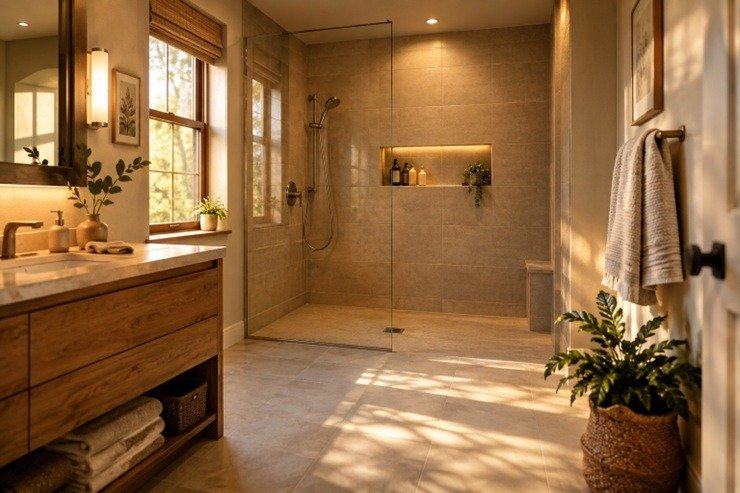
A traditional bathtub, raised shower base, low-threshold shower, and level-entry shower each serve different households. A lower entry can reduce the need to step over a tall barrier, but it must be paired with appropriate floor slope, drainage, waterproofing, and water containment. A walk-in shower is not automatically the best answer if the household still relies on a tub for young children, pets, or personal comfort. Consider a handheld showerhead, a securely installed seat, easy-to-reach controls, and properly anchored grab bars where they would be useful. If grab bars may be needed later, reinforced wall blocking can be installed during construction. The accessible design standards for grab bars and shower spaces can also provide useful planning context, although private homes may be subject to different local requirements.
Select Flooring and Materials Carefully
Choose surfaces based on wet traction, durability, cleaning needs, and repair options, not only color. Matte or textured floor finishes may offer more dependable footing than highly glossy surfaces when wet. Large-format tile and solid wall panels can reduce the number of grout lines, while natural stone may require more specialized cleaning and sealing than some manufactured materials. Ask how each product responds to moisture, staining, soap residue, and routine cleaners. A lower-maintenance bathroom is not maintenance-free, but fewer seams, sensible material choices, and accessible surfaces can make regular upkeep less demanding.
Improve Lighting and Ventilation
Layer the Lighting
Use general lighting throughout the room and even task lighting around the vanity to minimize shadows during grooming. Soft floor-level lighting can make late-night trips more comfortable. Avoid excessive glare by considering how mirrors, glossy tile, countertops, and fixture finishes reflect light.
Control Moisture
Bathroom exhaust fans should remove humid air at its source and vent outdoors, not into an attic or other enclosed space. The EPA notes that bathroom exhaust fans remove contaminants near their sources. Use the fan during bathing, follow the manufacturer’s maintenance instructions, and address small leaks before they damage surrounding materials.
Plan Storage and Clear Walking Paths
Better storage can improve safety and speed up cleaning without enlarging the room. Keep everyday toiletries within easy reach, use drawer dividers for small items, and place towel hooks close to the shower exit. Recessed niches and shallow shelving can reduce countertop and floor clutter. Avoid freestanding pieces that narrow the route between the door, vanity, toilet, and bathing area, and keep cleaning products secured out of reach of children and pets.
Add Future-Ready Features
Universal design can look polished and comfortable rather than institutional. Lever-style hardware, easy-grip controls, reachable shelving, sensible clearances, and a shower layout that can accommodate a seat later are useful for people of many ages. These choices can make the room easier to use today while preserving flexibility for future needs.
Build a Practical Budget and Project Plan
A complete estimate should cover more than visible fixtures and finishes. Include demolition and disposal, plumbing and electrical changes, surface preparation, waterproofing, ventilation, permits, inspections, labor, cleanup, and a contingency for hidden damage.
- Document current problems and rank priorities.
- Confirm the layout and bathing arrangement before purchasing materials.
- Compare products by long-term upkeep, not purchase price alone.
- Request detailed written estimates from qualified professionals.
- Confirm the schedule, payment terms, warranty details, and permit responsibilities.
Questions to Ask Before Work Begins
- Who will handle permits and inspections?
- How long will the bathroom be unavailable?
- How will the shower area be waterproofed and drained?
- Where will the exhaust fan vent?
- What happens if hidden water damage is found?
- Which cleaning products are appropriate for the selected surfaces?
Common Questions
Is a walk-in shower always better than a bathtub?
No. The best choice depends on room size, bathing routines, mobility needs, and whether a tub remains useful for children, pets, or personal preference.
Can a small bathroom be made safer?
Yes. Brighter lighting, improved storage, clear floor space, a compact vanity, and a lower shower entry can make a small bathroom easier to navigate.
Do low-maintenance materials eliminate cleaning?
No. Every bathroom needs regular cleaning, ventilation, and periodic checks for leaks or deteriorating sealant. Durable materials help reduce the effort involved.
When should a professional handle the work?
Qualified help is especially important for plumbing changes, electrical work, waterproofing, drain replacement, floor-height changes, structural modifications, and hidden moisture repairs.
Conclusion
A well-planned bathroom remodel should make everyday routines safer, more comfortable, and easier to manage while still reflecting the homeowner’s style. Starting with the existing layout and identifying problems with movement, storage, moisture, lighting, and cleaning can help keep the project focused on practical improvements. Features such as lower shower entries, slip-resistant surfaces, clear walking paths, effective ventilation, layered lighting, and accessible storage can support daily use without making the room feel overly specialized. Homeowners should also consider waterproofing, drainage, plumbing, electrical work, permits, and potential hidden repairs when building the budget and project timeline. Future-ready features can provide additional flexibility as household needs change. By balancing safety, maintenance, comfort, appearance, and long-term usability, homeowners can create a bathroom that functions well today and remains adaptable for years to come.












7 Ways Educational Institutions Can Improve Their Learning Spaces

Beyond Med School: Elevating Your Healthcare Impact with a Specialized Master’s Degree

Bathroom Remodeling: How to Improve Safety and Maintenance

How To Build Fair Job Offers When Cash Incentives Vary

7 Simple Tips for Better Digital Vision Health

Best New Apps in 2026: 7 To Try

Which Dental Problems Need a Specialist Instead of General Care?

How to Choose the Right Car for Your Needs

Best AI for the Defense Sector: 5 Platforms to Know

A Seasonal Exterior Cleaning Calendar for Healthier, Safer Homes

100 Motivational Quotes to Inspire You in 2026

How to Create a Vision Board That Actually Works (2026)

22 Best Self-Help Books to Read in 2026

How to Achieve Personal Growth in 2026

New Year Wishes and Quotes to Inspire and Celebrate (2026)

Loeb Smith reviews: Why Crypto Licensing Demands Patience, Structure, and Skepticism

Custom Cover Letter Generator: Create Tailored Letters in Minutes

How to Leverage Personal Development for Career Advancement

Top Fitness Coach Certification Programs for Aspiring Trainers

From Denver to Vail: Secrets, Snow, and Soul of the Rockies
-

 Motivation6 years ago
4 Fun New Hobbies To Try This Year
-

 Quotes4 years ago
53 Motivational Gym Quotes to Fuel Gym Workout
-

 Quotes11 years ago
50 Most Powerful Quotes Ever Spoken
-

 Travel2 years ago
Why You Should Travel More: The Many Benefits of Seeing the World
-
 Quotes9 months ago
100 Motivational Quotes to Inspire You in 2026
-

 Quotes2 years ago
43 Inspirational Quotes About Thoughts
-

 Quotes4 years ago
Motivational Quotes by Famous People
-

 Quotes1 year ago
100 Motivational Quotes to Start Your Day with Positivity