
Lifestyle
Before You Add an EV Charger or Heat Pump: Checking Electrical Capacity in Vancouver, WA

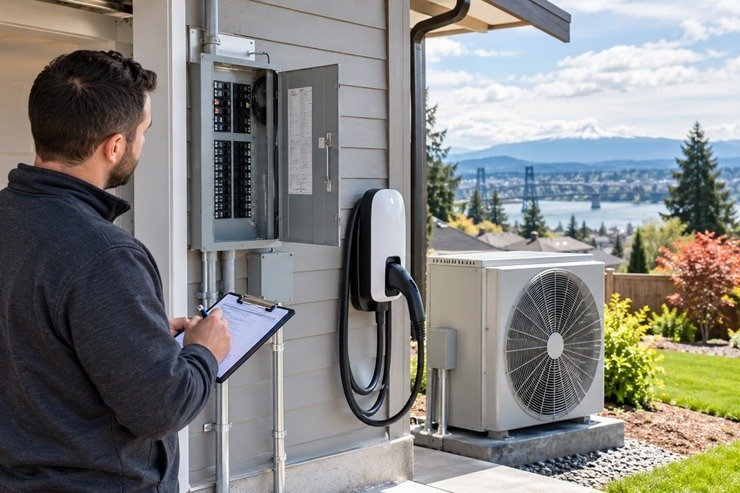
Adding a Level 2 EV charger, heat pump, or induction range can make a home more efficient, but these upgrades only work well when your electrical system can support them. In Vancouver’s wet climate and mix of older and newer housing, capacity, code compliance, and installation conditions all matter. A short checklist before you book an electrician helps you avoid unnecessary rework, nuisance breaker trips, or permitting delays. Below, we walk through how to identify the loads you want, read basic panel information, understand simplified demand calculations, plan for outdoor or garage conditions, and prepare your home for a smooth install and inspection.
1. Define the loads you plan to add and their duty cycles
Start with the equipment nameplate or spec sheet. A common Level 2 EV charger (EVSE) might be rated for a 40- or 50-amp circuit and is considered a continuous load, meaning it is sized at 125 percent for breakers and conductors. A heat pump can draw modest current most of the year, but auxiliary heat strips can spike demand in cold snaps. An induction range may require a 40- or 50-amp circuit, while a garage workshop might need a dedicated 20-amp, GFCI-protected receptacle. Picture a weeknight when the car is charging, the oven is on, and a dryer is running; capturing these real usage overlaps guides decisions. A licensed Vancouver, WA electrical company can turn this list into a formal load calculation, help choose between a hardwired EVSE and a NEMA 14-50 receptacle, and determine whether a lower-current setting meets your driving routine.
2. Check your existing service and panel capacity
Check your main breaker rating and panel labeling to determine headroom. Many homes have 100-, 150-, or 200-amp service; the main breaker is usually marked clearly, and the interior label shows the panel bus rating and whether tandem breakers are allowed in certain slots. Signs you are at the limit include frequent trips when a range, dryer, or microwave cycles on; double-tapped breakers where two conductors share a lug not rated for it; or a panel packed with tandems beyond the directory’s allowances. Older homes may use multiwire branch circuits that require a two-pole breaker with a common trip, not two separate single-pole breakers. If a detached garage is in the plan, consider feeder length and voltage drop; long runs to an outbuilding may warrant upsizing conductors, and aluminum feeders require lugs rated AL/CU with antioxidant compound applied per the manufacturer’s instructions.
3. Estimate demand with a simplified load calculation
A load calculation weighs how likely it is that appliances run at the same time. A simplified approach considers general lighting load based on square footage; required small-appliance and laundry circuits in kitchens and laundry rooms; fixed appliances like a water heater or range at nameplate; the largest motor at 125 percent; and continuous loads like EV charging at 125 percent. Demand factors reduce some totals because not everything runs simultaneously. If the tally suggests the existing 100-amp service will be tight once you add a 50-amp EVSE and a heat strip, options include adding a subpanel if breaker space is the only constraint, upgrading the service if total demand exceeds the service rating, or implementing a load management strategy. Some smart EVSEs can be set to 24 or 32 amps to fit within available capacity, trading faster charging for avoiding an upgrade. When adding a subpanel, keep neutrals and grounds isolated, and do not install the bonding screw in a downstream panel.
4. Plan for installation conditions in our wet climate
Vancouver’s rain means outdoor-rated equipment and weather protection are essential. Use NEMA 3R enclosures or better for exterior disconnects, and in-use covers for outdoor receptacles so cords remain protected when plugged in. Garages and exterior outlets typically require GFCI protection, while many habitable rooms call for AFCI protection; a combination AFCI/GFCI breaker or device may be appropriate where both are required. For exterior runs, EMT conduit holds up well above grade; Schedule 40 or 80 PVC is common underground, with THWN conductors pulled inside. Seal wall penetrations and caulk around meter bases or service conduits to keep moisture out. If a carport charger is planned, confirm the mounting height, cord reach, and that the cable can be stowed off the wet ground. Avoid using extension cords with EVSE cords; hardwired or dedicated receptacle solutions are safer and comply with listing requirements.
5. Account for detached structures and longer runs
When the charger or workshop is in a detached garage, you may need a feeder, a grounding electrode system at the outbuilding, and a proper means of disconnecting. Burial depth varies by wiring method; PVC conduit with individual THWN conductors often allows shallower burial than direct-buried cable, but check your permitting authority’s requirements. Plan routes that minimize sharp bends for easier wire pulls, and consider voltage drop for long feeders by upsizing conductors one or two sizes to keep equipment operating within spec. If sharing a neutral on a multiwire branch circuit, use a two-pole breaker with a common trip to protect the shared neutral from overheating, and keep the conductors in the same cable or raceway so magnetic fields cancel as designed.
6. Permits, utility coordination, and preparing your home
Most panel changes, service upgrades, new circuits, and EVSE installations require permits and inspections. For a service upgrade, your electrician coordinates with the utility to pull the meter and may need to replace the meter base or service mast to match the new ampacity and schedules outages so refrigerators, aquariums, and network equipment are protected. Clear the working space in front of the panel to meet the typical 30-inch width and 36-inch depth clearance, and provide access to attics or crawlspaces if cables will be fished. Dust barriers help keep drywall debris off nearby furnishings. Keep pets secured and plan parking so a truck and conduit bender can get close to the work area. After installation, update the panel directory, test GFCI and AFCI devices using their test buttons, check that in-use covers close fully, and store the EVSE holster where the cord won’t be driven over.
Thoughtful planning before you add high-demand equipment pays off in safe operation and fewer surprises during permitting and installation. By listing the actual appliances you will use, reading your panel’s ratings, understanding how continuous loads are sized, and anticipating rain, conduit routes, and working clearances, you set the project up for a clean inspection and reliable daily use. If the rough math shows your system is near its limit, choosing a lower-amperage charger or adding a subpanel can bridge the gap until a future service upgrade fits the budget. A little preparation now means your new heat pump, induction range, or EV charger will perform as expected on day one.











How to Build an Investment Plan That Can Handle Market Swings

How Coastal Storms Overwhelm Residential Pipes During Drain Cleaning in Miami

How Skin Renewal Microneedling at Anne Therese Transforms Dull Skin

Natural Remedies Are Shaping the Next Generation of Mindful Lifestyles

What Visitors Should Know About Miami Roads, Rental Cars and Road Accidents

5 Signs You’re Not Just Busy, You’re Overwhelmed

How Hiring Emergency Water Damage Restoration Service Prevents Structural Rot

Planning a Lahore Heritage Break with Time to Explore

How Small Businesses Can Make Cross-Border Payments Faster, Clearer, and More Reliable

How Tampa Businesses Can Choose a Commercial Location

100 Motivational Quotes to Inspire You in 2026

How to Create a Vision Board That Actually Works (2026)

22 Best Self-Help Books to Read in 2026

How to Achieve Personal Growth in 2026

New Year Wishes and Quotes to Inspire and Celebrate (2026)

Loeb Smith reviews: Why Crypto Licensing Demands Patience, Structure, and Skepticism

How to Leverage Personal Development for Career Advancement

Top Fitness Coach Certification Programs for Aspiring Trainers

From Denver to Vail: Secrets, Snow, and Soul of the Rockies

How to Choose the Best Manali Tour Package for a Family-Friendly Vacation?
-

 Motivation6 years ago
4 Fun New Hobbies To Try This Year
-

 Quotes4 years ago
53 Motivational Gym Quotes to Fuel Gym Workout
-

 Quotes11 years ago
50 Most Powerful Quotes Ever Spoken
-

 Travel2 years ago
Why You Should Travel More: The Many Benefits of Seeing the World
-
 Quotes10 months ago
100 Motivational Quotes to Inspire You in 2026
-

 Quotes3 years ago
43 Inspirational Quotes About Thoughts
-

 Quotes4 years ago
Motivational Quotes by Famous People
-

 Quotes1 year ago
100 Motivational Quotes to Start Your Day with Positivity