
Education
Keep Your CPR Skills Ready: A Simple Renewal Plan for Work, Home, and Community

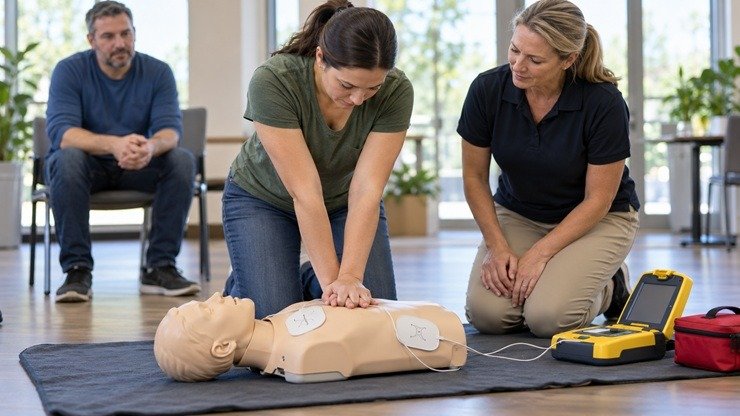
CPR renewal is easy to postpone because the expiration date can feel distant. Yet waiting until the final week can leave little time to find an approved class, complete a skills session, or submit proof to an employer. Scheduling CPR renewal online early can make the process more manageable, especially for busy workers, parents, coaches, and volunteers.
A current card is important, but real readiness matters too. In an emergency, a teacher may need to respond before the school nurse arrives, a parent may need to direct someone to call 911, or a coach may need to locate the nearest AED. Regular review helps make the basic response sequence feel less unfamiliar when every moment counts.
Why CPR Renewal Deserves a Calendar Reminder
Skills can fade sooner than a certification expires. The American Red Cross notes that CPR skill retention can decline within months of initial training and reports that fewer than half of participants may pass a skills test one year after training. Its guidance on CPR skill retention between certifications reinforces why a renewal date should be paired with occasional practice.
A calendar reminder is not just an administrative tool. It gives you time to confirm the right course, choose a format that meets your requirements, and refresh your confidence without last-minute pressure. Set reminders for six months, three months, and one month before the date printed on your certificate.
Check What Your Current Credential Requires
Start by opening your physical card, digital certificate, or training account. Look for the course name, issuing organization, issue date, expiration date, and any course or certificate identification number. Save a digital copy somewhere secure, such as a personal cloud folder, and keep another copy where you can quickly share it with an employer or program coordinator.
Do not assume every course labeled “CPR” is interchangeable. A community CPR or CPR/AED course may be appropriate for a parent, fitness instructor, teacher, or volunteer. BLS is generally intended for healthcare professionals and professional responders, and it may include requirements that differ from a general CPR class. Ask your employer, school, licensing board, or volunteer organization exactly which credential and provider they accept before enrolling.
Photorealistic image of a CPR certification card, calendar, and pen arranged on a desk beside a CPR training manikin, illuminated by warm golden-hour window light with soft shadows and a calm, prepared atmosphere.
Choose the Right Renewal Format
In-Person Training
In-person training works well for learners who value direct coaching, immediate correction, and a structured class setting. It can also be the right choice when an employer requires a live demonstration of CPR and AED skills. If you learn best by practicing with an instructor nearby, this format offers useful feedback.
Blended Learning
Blended courses commonly combine self-paced online instruction with an in-person skills session. This approach can offer flexibility for the knowledge portion while preserving hands-on practice with a manikin and AED trainer. Before registering, confirm that both portions are included and that you understand the deadline for completing the skills session.
Online-Only Learning
Online-only options may be useful for personal education, awareness training, or situations where no formal workplace credential is required. However, an online completion record without an in-person or verified skills component may not satisfy an employer, school, or licensing requirement. Check acceptance rules first, rather than discovering a problem after finishing the course.
Self-Guided Skills Practice
Training options are continuing to evolve. In March 2026, the American Heart Association announced a self-guided resuscitation learning model that combines online coursework with self-guided skills verification using simulation technology. The key takeaway is simple: flexible scheduling does not necessarily mean skipping competency checks.
Build a Simple Renewal Timeline
- Six months before expiration: Review your certificate and confirm the credential your job, school, or organization requires.
- Three months before expiration: Compare approved course formats, locations, costs, and skill-check expectations.
- One month before expiration: Complete the course, assessment, and any required hands-on skills session.
- After completion: Download the certificate, send it to the appropriate person if needed, and add the new expiration date to your calendar.
- Every few months: Spend a few minutes reviewing emergency priorities, AED locations, and how to communicate clearly with emergency dispatchers.
Common Renewal Mistakes to Avoid
- Waiting until only a few days remain before expiration.
- Selecting a general CPR class when the role requires BLS.
- Assuming an online-only course automatically meets workplace requirements.
- Missing a required in-person or verified skills assessment.
- Failing to download or save the completion certificate.
- Overlooking an updated employer policy, school rule, or licensing requirement.
How to Keep Skills Fresh Between Courses
Formal renewal is only one part of preparedness. Review the emergency action plan at your workplace, school, gym, or community facility. Identify the nearest AED in places you visit often, and make sure you know who is responsible for calling emergency services. If your training applies to children or infants, revisit the differences covered in your course rather than assuming adult-response steps are identical.
Short, occasional refreshers can also be useful. Watch approved training materials, participate in workplace drills, or talk through a simple scenario with family members: recognize an emergency, call 911, retrieve an AED if available, and begin the actions covered in your training. Practice does not replace a required course, but it can make the formal renewal more meaningful.
Questions Readers Often Ask
Can CPR Certification Be Renewed Before It Expires?
Often, yes. Whether you qualify for a shortened renewal course and how the new completion date is handled depends on the training provider and the organization that requires the credential. Confirm those details before booking.
What Happens if a CPR Card Has Expired?
An expired card can create a compliance gap for work, school, or volunteer duties. Contact the issuing provider or review the course rules to find out whether you can take a renewal course or need to complete an initial course again.
Does Online CPR Training Always Count?
No. Acceptance depends on the training format, skill verification method, provider, and the rules of the organization reviewing your certificate.
Is BLS the Same as CPR?
No. CPR is a core lifesaving skill, while BLS is typically a broader credential designed for healthcare professionals and professional responders. Always match the course to the requirement.
A Quick Checklist Before Enrollment
- Read the exact job, school, or licensing requirement.
- Match the course title to the credential you need.
- Confirm whether hands-on skills verification is required.
- Verify that the provider and format are accepted by the organization requesting certification.
- Understand how and when the completion certificate will be delivered.
- Save the record in at least two secure places.
- Add the next expiration date to your calendar before moving on.
Conclusion
CPR renewal works best as a regular safety habit rather than a last-minute task. Review your credential, verify the correct course format, schedule any required skills check, and keep the certificate accessible. With steady preparation and occasional practice, you can stay ready to respond with greater confidence at work, at home, and in your community.














Keep Your CPR Skills Ready: A Simple Renewal Plan for Work, Home, and Community

The Moving-Day Survival Kit Every Household Should Prepare

Things People Wish They Had Planned Better Before Moving

Does Where You Live Affect Your Life Expectancy?

An Inside Look at How We Built a Scalable Customer Experience

A Simple Scalp-First Hair-Care Routine for Thinning Hair

How Live Music Shapes Better Corporate Events

Move From Manual Payroll to Payroll Software With ADP: How ADP Helps Businesses Improve Accuracy, Compliance, and Efficiency

Why Cultural Capability Matters in Stakeholder Engagement

From Everyday Savings to Exclusive Offers: Discovering the Best Deals This Week

100 Motivational Quotes to Inspire You in 2026

How to Create a Vision Board That Actually Works (2026)

22 Best Self-Help Books to Read in 2026

How to Achieve Personal Growth in 2026

New Year Wishes and Quotes to Inspire and Celebrate (2026)

Loeb Smith reviews: Why Crypto Licensing Demands Patience, Structure, and Skepticism

How to Leverage Personal Development for Career Advancement

Top Fitness Coach Certification Programs for Aspiring Trainers

From Denver to Vail: Secrets, Snow, and Soul of the Rockies

How to Choose the Best Manali Tour Package for a Family-Friendly Vacation?
-

 Motivation6 years ago
4 Fun New Hobbies To Try This Year
-

 Quotes4 years ago
53 Motivational Gym Quotes to Fuel Gym Workout
-

 Quotes11 years ago
50 Most Powerful Quotes Ever Spoken
-

 Travel2 years ago
Why You Should Travel More: The Many Benefits of Seeing the World
-
 Quotes10 months ago
100 Motivational Quotes to Inspire You in 2026
-

 Quotes3 years ago
43 Inspirational Quotes About Thoughts
-

 Quotes4 years ago
Motivational Quotes by Famous People
-

 Quotes1 year ago
100 Motivational Quotes to Start Your Day with Positivity